
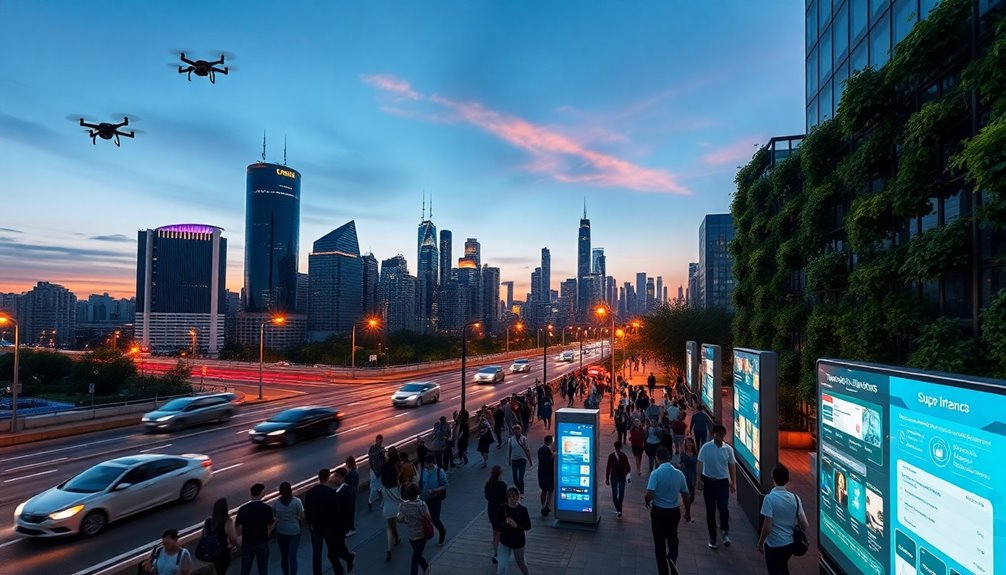
Technology plays an essential role in building smarter cities by enhancing infrastructure, optimizing energy management, and engaging citizens. Smart infrastructure incorporates advanced materials and real-time monitoring for improved resilience and efficiency. Intelligent energy systems utilize data analytics for sustainable resource usage. The Internet of Things (IoT) strengthens urban living by enhancing safety and resource management. Citizen engagement fueled by technology promotes transparency. Exploring these elements reveals how cities can become more innovative and sustainable in their development.
The Rise of Smart Infrastructure
The emergence of smart infrastructure marks a transformative shift in urban development. This evolution is characterized by the integration of advanced technologies and smart materials, which enable cities to adapt and thrive in an increasingly complex world. By employing innovative construction techniques and high-performance materials, urban planners can improve infrastructure resilience, fortifying cities against environmental challenges and unforeseen disruptions.
Smart infrastructure leverages data analytics and real-time monitoring, empowering decision-makers to optimize resource allocation and maintenance schedules. This proactive approach not just extends the lifespan of critical assets but also minimizes operational costs, making a compelling case for investment. As cities embrace this paradigm, they position themselves as models of efficiency and sustainability, ultimately attracting business and talent. The strategic implementation of smart materials and technologies becomes a crucial competitive advantage, ensuring urban environments are not merely functional but also resilient and future-ready.
Enhancing Public Transportation With Technology
Technology plays an essential role in improving public transportation systems. Real-time tracking systems provide commuters with up-to-date information on vehicle locations, enhancing convenience and reliability. Meanwhile, smart fare payment solutions streamline the ticketing process, making it easier for passengers to access various modes of transport.
Real-Time Tracking Systems
Public transportation systems are increasingly integrating real-time tracking systems to improve efficiency and user experience. These advanced technologies leverage real-time analytics to monitor vehicle locations, enabling dynamic routing that adjusts to traffic conditions. Such adaptability not only optimizes travel times but also improves overall operational efficiency, empowering transit authorities to respond swiftly to changing demands.
| Feature | Benefits |
|---|---|
| Real-Time Updates | Informs passengers of delays |
| Dynamic Routing | Reduces congestion and wait times |
| Improved Safety | Improves response to emergencies |
Smart Fare Payment Solutions
Innovative fare payment solutions are transforming the public transportation environment, making it more accessible and user-friendly. These advancements leverage mobile payment integration, enabling commuters to pay seamlessly through their smartphones. The rise of digital wallet adoption further improves this experience, allowing users to store multiple transit passes and payment methods in one secure location. This modernization not merely streamlines fare collection but also reduces physical contact, aligning with contemporary health and safety standards. By adopting these technologies, cities empower citizens with greater convenience and efficiency in their daily commutes. As smart fare payment solutions continue to evolve, they serve as a cornerstone for building smarter, more responsive urban transportation networks, eventually promoting economic growth and improving the quality of life for all residents.
Intelligent Energy Management Systems
As urban areas grow and demand for energy escalates, intelligent energy management systems have emerged as vital tools for optimizing energy usage. These systems utilize advanced algorithms and data analytics to improve energy efficiency across various sectors. By monitoring consumption patterns in real-time, they empower city planners and energy providers to make informed decisions, eventually minimizing waste and maximizing output.
Furthermore, intelligent energy management systems facilitate seamless renewable integration, enabling cities to shift toward cleaner energy sources. By coordinating the use of solar, wind, and other renewables with existing grids, these systems guarantee that energy supply meets demand during reducing reliance on fossil fuels.
The adoption of such technologies not merely promotes sustainability but also boosts the resilience of urban energy infrastructure. As cities continue to evolve, the implementation of intelligent energy management systems will be vital in shaping a more robust and sustainable urban future.
The Impact of IoT on Urban Living
The integration of Internet of Things (IoT) technology greatly improves urban living by enhancing public safety measures and optimizing resource management systems. Smart sensors and connected devices enable cities to respond more effectively to emergencies and monitor infrastructure in real-time. As a result, residents experience a safer and more efficient urban environment.
Enhanced Public Safety Measures
Smart cities are increasingly leveraging the Internet of Things (IoT) to improve public safety measures, transforming urban living into a more secure experience. By integrating advanced sensor networks and real-time data analytics, city officials can enhance emergency response capabilities, ensuring rapid intervention during crises. IoT technologies empower law enforcement agencies with predictive analytics, greatly improving crime prevention strategies. Smart surveillance systems monitor urban areas, providing actionable insights that deter criminal activity and promote a sense of security among residents. In addition, interconnected emergency services facilitate seamless communication, allowing for efficient resource allocation during emergencies. Through these innovative applications of IoT, cities not only safeguard their inhabitants but equally establish a formidable framework for sustained urban resilience and safety.
Efficient Resource Management Systems
Integrating IoT technologies not merely improves public safety but furthermore streamlines resource management within urban environments. These systems enable precise resource allocation by utilizing real-time data, ensuring that city resources are deployed effectively and efficiently. With IoT sensors monitoring consumption patterns, cities can optimize energy usage, water distribution, and waste management processes, reducing costs and environmental impact. This data-driven approach empowers city administrators to make informed decisions that improve operational effectiveness and sustainability. As urban populations grow, the need for intelligent resource management becomes paramount, positioning IoT as an essential tool for modern governance. In the end, the strategic application of IoT in resource management not only raises urban living but strengthens a city's competitive edge in the global terrain.
Data-Driven Decision Making for City Planning
As cities face increasing challenges related to growth, sustainability, and infrastructure, data-driven decision making has emerged as a crucial strategy for effective urban planning. By utilizing urban analytics, city planners can extract actionable insights from vast datasets, enabling them to make informed choices that optimize resources and improve livability. Predictive modeling plays a pivotal role in this process, allowing officials to anticipate future trends and assess potential impacts of urban development initiatives.
This analytical rigor empowers decision-makers to prioritize projects based on data-backed projections, ensuring strategic investments that align with long-term objectives. Additionally, integrating real-time data facilitates adaptive management, providing the agility needed to respond to dynamic urban environments. In the end, embracing data-driven methodologies positions cities to leverage their full potential, promoting resilience and innovation in the face of evolving challenges. As a result, empowered leaders can create urban environments that meet the needs of their citizens and drive economic growth.
Promoting Sustainability Through Tech Innovations
Emerging technologies are increasingly being utilized to drive sustainability in urban environments. Smart cities leverage innovations in renewable energy and green technology to transform their infrastructures, enhancing efficiency and reducing ecological footprints. Solar panels, wind turbines, and advanced energy storage systems are becoming integral to urban planning, enabling cities to utilize natural resources effectively.
Moreover, the integration of smart grids facilitates the ideal distribution of energy, allowing for real-time adjustments to consumption patterns. These advancements not only promote energy independence but likewise appreciably lower greenhouse gas emissions, bolstering city resilience against climate change.
Additionally, intelligent waste management systems enhance resource recovery and recycling processes, minimizing landfill contributions. By prioritizing sustainability through technological innovation, urban leaders position themselves as vanguards of an environmentally conscious future, paving the way for a robust and sustainable urban economy that aligns with global environmental goals.
Engaging Citizens in the Smart City Movement
While technological advancements play a crucial role in the development of smart cities, engaging citizens remains equally important for cultivating a sense of ownership and collaboration. Effective community engagement can empower residents, creating a collective vision for urban development.
Digital platforms facilitate this engagement, allowing for real-time feedback and interaction between citizens and city planners. The following table illustrates key aspects of citizen engagement in smart cities:
| Aspect | Benefits | Tools |
|---|---|---|
| Involvement | Increases buy-in | Surveys, Polls |
| Transparency | Builds trust | Live data dashboards |
| Feedback mechanisms | Improves decision-making | Mobile apps, Forums |
| Education | Informs citizens | Workshops, Webinars |
| Collaboration | Encourages partnerships | Social media, Online forums |
Frequently Asked Questions
How Can Small Towns Implement Smart City Technologies Effectively?
Could small towns truly utilize the strength of technology to transform their futures? The answer lies in a strategic blend of community engagement and infrastructure investment. By involving residents in decision-making processes, towns can uncover unique needs and cultivate a sense of ownership. Coupled with targeted investments in essential infrastructure, this approach not only improves efficiency but also guarantees sustainability. The path to innovation beckons, waiting for those brave enough to seize the opportunity.
What Are the Privacy Concerns Related to Smart City Technologies?
Privacy concerns surrounding smart city technologies primarily revolve around data surveillance and the necessity of citizen consent. As these technologies collect vast amounts of personal information, questions arise about the extent of monitoring and the potential for misuse. The balance of leveraging data for city improvements during respecting individual privacy rights poses a challenge. Leaders must navigate these challenges, ensuring transparency and promoting trust among citizens to maintain their support and engagement.
How Do Smart Cities Handle Cybersecurity Threats?
In the digital domain, where shadows dance with light, cybersecurity stands as the fortress protecting the bastion of innovation. Smart cities employ robust network security measures, creating an impenetrable shield against malicious intrusions. Data encryption is wielded like a sword, safeguarding sensitive information from prying eyes. As guardians of the digital age, these cities recognize that maintaining authority requires an unwavering commitment to thwarting threats, ensuring their citizens thrive in a secure environment.
What Are the Costs Associated With Building a Smart City?
Building a smart city involves significant costs that encompass infrastructure investment and careful budget allocation. The financial commitment extends beyond initial expenditures; ongoing maintenance and upgrades are vital for sustainability. Strategic planning is fundamental to guarantee resources are efficiently utilized, maximizing the return on investment. Decision-makers must prioritize funding for important technologies, ensuring that both immediate needs and future growth are addressed, eventually positioning the city as a leader in urban innovation and development.
How Can Citizens Participate in Smart City Planning Decisions?
In the lively fabric of urban life, citizens weave their voices into the structure of community engagement. By embracing participatory design, individuals become architects of their surroundings, shaping decisions that impact their daily lives. Through workshops, forums, and digital platforms, they utilize their collective strength, ensuring that diverse perspectives illuminate the path to a brighter future. In this collaborative dance, every voice becomes a note in the symphony of smart city planning.