
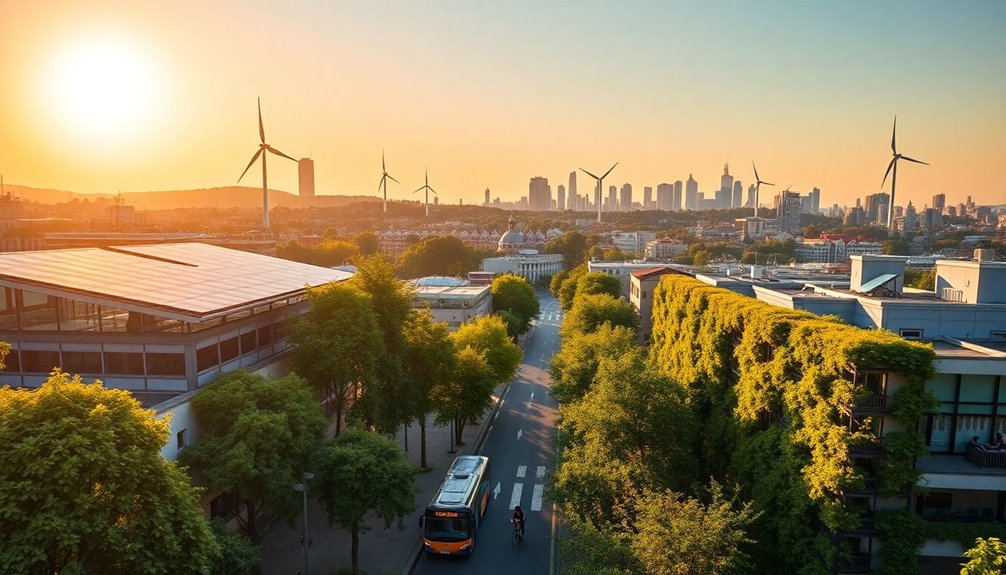
Renewable energy technologies are revolutionizing urban environments. Solar panels are becoming commonplace, as compact wind turbines utilize urban wind currents. Geothermal systems offer sustainable heating solutions, and hydropower improves resilience and water management. Advancements in building retrofits improve energy efficiency, and community solar projects promote local empowerment. Smart infrastructure integrates these solutions, nurturing a greener urban environment. These initiatives not just create sustainable cities but additionally set the stage for future innovations in urban planning.
The Rise of Solar Energy in Urban Areas
As cities increasingly prioritize sustainability, solar energy has emerged as a prominent solution for urban areas seeking to reduce their carbon footprint. The rise of solar panel installations in metropolitan regions exemplifies a strategic shift toward renewable energy. By utilizing the sun's energy, urban centers can markedly decrease reliance on fossil fuels and improve energy independence.
Governments and private entities are implementing urban solar incentives designed to promote the adoption of solar technologies. These incentives often include tax credits, rebates, and streamlined permitting processes, making it financially viable for both residential and commercial properties to invest in solar systems.
Furthermore, the integration of solar energy not merely addresses environmental concerns but also empowers citizens and businesses to take control of their energy consumption. As urban areas embrace these advancements, they pave the way for cleaner, more resilient cities equipped to meet the demands of a sustainable future.
Innovative Wind Energy Solutions for Cities
Cities are now exploring innovative wind energy solutions to complement solar initiatives and further improve their sustainability efforts. As urban areas endeavor for energy independence, wind turbine integration is becoming increasingly viable. Compact and efficient designs allow for the installation of wind turbines in various city environments, from rooftops to public parks.
Urban wind farms are emerging as significant assets, utilizing the often-overlooked wind currents present in densely populated environments. These advancements not just contribute to reducing carbon footprints but also empower municipalities by diversifying their energy portfolios.
Moreover, the integration of smart technology with wind energy systems enables cities to optimize energy production and consumption dynamically. By adopting these innovative solutions, urban centers can lead the charge toward a greener future, demonstrating that sustainability and influence can coexist harmoniously. As cities embrace wind energy, they redefine their roles as pioneers in the renewable energy revolution.
Harnessing Geothermal Energy for Urban Heating
Geothermal heating systems offer an innovative solution for urban areas seeking sustainable energy sources. Their benefits include reduced greenhouse gas emissions and lower heating costs, making them an attractive option for city planners. Nevertheless, challenges such as initial installation costs and site-specific feasibility must be addressed to guarantee successful implementation.
Geothermal Heating Systems Overview
A growing number of urban areas are turning to geothermal heating systems as a sustainable solution for meeting their energy needs. These systems exploit the Earth's consistent subterranean temperature to provide efficient heating, considerably reducing reliance on fossil fuels. The geothermal benefits extend beyond environmental impact; they additionally encompass notable cost savings and improved system efficiency. By utilizing ground-source heat pumps, cities can achieve ideal energy performance during minimizing greenhouse gas emissions. Furthermore, these systems are resilient and require minimal maintenance, making them an attractive choice for urban planners. As urbanization continues to escalate, tapping into geothermal energy emerges as a potent strategy to create greener, more sustainable cities, poised to lead the way in innovative energy solutions.
Benefits for Urban Areas
Numerous benefits arise from utilizing geothermal energy for urban heating, making it an increasingly attractive option for metropolitan areas. This renewable resource considerably reduces reliance on fossil fuels, contributing to lower greenhouse gas emissions and enhancing urban biodiversity. By integrating geothermal systems, cities can create cleaner environments, nurturing healthier living conditions and promoting sustainable transportation initiatives. In addition, geothermal energy provides consistent and reliable heating solutions, which can lead to reduced energy costs for residents and businesses alike. As urban areas continue to expand, the implementation of geothermal energy not only addresses immediate heating needs but likewise supports long-term sustainability goals. In the end, this shift positions cities as leaders in the quest for a greener future, enabling communities to thrive.
Implementation Challenges and Solutions
Whilst utilizing geothermal energy for urban heating offers significant advantages, several implementation challenges must be addressed to realize its full potential. Key obstacles include regulatory hurdles that can impede project initiation and financing models that may not attract necessary investment.
| Challenge | Potential Solution |
|---|---|
| Regulatory Hurdles | Streamline permitting processes |
| Inadequate Financing | Develop public-private partnerships |
| Technical Limitations | Invest in R&D for improved systems |
Overcoming these challenges is critical for cities aiming to leverage geothermal energy. By nurturing collaboration among stakeholders and creating innovative financing models, urban areas can successfully integrate geothermal solutions, driving sustainable growth and energy independence.
The Role of Hydropower in Sustainable Urban Development
As urban areas increasingly seek sustainable solutions to meet their energy demands, hydropower emerges as a pivotal component in cultivating greener cities. This renewable energy source utilizes the strength of flowing water, providing a steady, reliable supply of electricity that can considerably reduce dependency on fossil fuels. The hydropower benefits extend beyond energy generation; it improves urban resilience by mitigating flooding risks and enhancing water management systems.
Incorporating hydropower into urban infrastructure not solely supports energy efficiency but additionally promotes economic growth through the creation of green jobs and investment opportunities. Furthermore, cities that leverage hydropower can experience lower energy costs, making them more attractive to residents and businesses alike. As cities grapple with the dual challenges of climate change and population growth, hydropower stands out as a durable and efficient solution, ensuring a sustainable urban future whilst fortifying communities against environmental uncertainties.
Energy Efficiency: Retrofitting Old Buildings
Retrofitting old buildings presents significant benefits, including improved energy efficiency and reduced operating costs. Innovative retrofit examples, such as advanced insulation and smart lighting systems, demonstrate the potential for transforming aging structures into modern, sustainable assets. This approach not just preserves historical architecture but additionally contributes to broader environmental goals in urban settings.
Benefits of Retrofitting
When older buildings are retrofitted for energy efficiency, significant benefits can be realized not merely by the occupants but also by the broader community. These retrofits lead to substantial energy savings, reducing utility costs and enabling funds to be redirected toward other community needs. Improved insulation, energy-efficient windows, and advanced HVAC systems not only lower consumption but additionally contribute to better air quality within urban environments. As buildings consume less energy, the demand on energy grids diminishes, leading to a reduced carbon footprint. Moreover, healthier indoor conditions promote productivity and well-being among occupants, creating a ripple effect that raises the overall quality of life in the community. Consequently, retrofitting stands as an influential strategy for sustainable urban development.
Innovative Retrofits Examples
Numerous innovative retrofit examples showcase how older buildings can be transformed into energy-efficient structures, reflecting a commitment to sustainability and modern technology. One prominent case involves the installation of innovative insulation materials that greatly reduce heat loss, thereby enhancing overall energy performance. Furthermore, the integration of energy-efficient windows not just improves aesthetics but also minimizes energy consumption by maximizing natural light during the maintenance of peak thermal comfort. These retrofitting initiatives empower urban environments to reduce their carbon footprint and operational costs, demonstrating that age-old structures can embrace advanced solutions. By prioritizing strategic upgrades, cities can revitalize their architectural heritage while leading the way in energy efficiency and sustainability, ultimately creating a greener future for all residents.
Smart Grids: The Future of Urban Energy Management
As cities evolve to meet the demands of a growing population and climate change, smart grids emerge as an essential innovation in urban energy management. This advanced technology integrates digital communication and automation to optimize energy distribution, ensuring that urban energy efficiency reaches its fullest potential. By enabling real-time monitoring and control, smart grid technology allows urban planners and energy providers to respond swiftly to fluctuations in demand and supply, thereby reducing waste and enhancing reliability.
Moreover, smart grids facilitate the integration of renewable energy sources, promoting resilience and sustainability in urban environments. They empower consumers with greater control over their energy usage, encouraging responsible consumption and nurturing a culture of efficiency. As cities aim for greener futures, the adoption of smart grids will play a significant role in transforming energy environments, ensuring that urban centers can thrive in an era characterized by both environmental challenges and opportunities.
Urban Agriculture and Renewable Energy Integration
The integration of renewable energy in urban agriculture presents innovative solutions for sustainable food production. Vertical farming innovations, solar-powered greenhouses, and various urban farming initiatives are transforming city environments into productive green spaces. These advancements not only improve local food security but additionally contribute to reducing urban carbon footprints.
Vertical Farming Innovations
As urban spaces continue to expand, vertical farming innovations emerge as a promising solution to meet growing food demands and mitigate environmental challenges. By utilizing advanced vertical farm technology, cities can produce food within their own boundaries, reducing transportation emissions and ensuring fresher produce. This approach not only supports sustainable agriculture but likewise optimizes land use, turning underutilized spaces into productive ecosystems. Innovations in hydroponics and aeroponics further improve resource efficiency, utilizing considerably less water than traditional farming methods. Moreover, integrating renewable energy systems into these vertical farms can energize operations sustainably, reinforcing the commitment to environmentally responsible practices. In the end, vertical farming represents a formidable paradigm shift, positioning urban centers as leaders in sustainable food production and environmental stewardship.
Solar-Powered Greenhouses
Building on the advancements seen in vertical farming, solar-powered greenhouses represent an innovative approach to urban agriculture that harmonizes food production with renewable energy. This state-of-the-art greenhouse design utilizes high solar panel efficiency to convert sunlight into energy, greatly reducing reliance on traditional energy sources. By integrating renewable energy systems, these greenhouses not just improve productivity but also minimize environmental impact.
- Optimized for urban spaces, maximizing land use
- Sustainable food production with reduced carbon footprint
- Resilience against fluctuating energy costs
Such advancements position cities to become self-sufficient in food supply as well as leading the charge toward a greener future. The synergy between agriculture and renewable energy exemplifies a dynamic shift in urban sustainability strategies.
Urban Farming Initiatives
As cities increasingly face challenges related to food security and environmental sustainability, urban farming initiatives have emerged as a practical solution that integrates renewable energy sources. These initiatives promote community engagement and the adoption of sustainable practices, transforming urban environments into productive spaces. By utilizing solar panels, wind turbines, and rainwater harvesting systems, urban farms can reduce their carbon footprint during providing fresh produce to city dwellers.
| Initiative | Renewable Energy Source | Community Engagement |
|---|---|---|
| Rooftop Gardens | Solar Energy | Workshops and Events |
| Vertical Farms | Wind Power | Local Farmer Markets |
| Community Gardens | Biogas | Volunteer Programs |
| Hydroponics Systems | Rainwater Harvesting | Educational Programs |
| Edible Landscaping | Geothermal Energy | Neighborhood Committees |
Electric Public Transportation: A Cleaner Alternative
As urban areas continue to grapple with pollution and traffic congestion, electric public transportation emerges as a viable solution to these pressing challenges. By adopting electric buses, cities can greatly reduce their carbon footprint during efficient and reliable travel options. These vehicles not only operate quietly but likewise improve air quality, creating healthier environments for residents. In addition, the integration of sustainable routes guarantees that public transport systems align with broader environmental goals.
- Reduction in greenhouse gas emissions
- Improved public health and well-being
- Enhanced efficiency in urban mobility
Electric public transportation represents a strong shift toward a greener urban environment. As cities increasingly invest in this technology, they pave the way for a sustainable future that prioritizes both ecological integrity and the needs of their citizens. This change signals a commitment to innovation, demonstrating that progress can harmonize with environmental stewardship.
Community Solar Projects: Empowering Local Residents
Although many urban residents may lack the means to install solar panels on their homes, community solar projects offer a promising solution by enabling shared access to renewable energy. These initiatives allow individuals to invest in a shared solar array, which generates electricity for the entire community. This model not only democratizes energy production but also encourages local empowerment, giving residents a stake in their energy future.
Community solar projects can greatly reduce electricity costs, making renewable energy more accessible to low-income households. By participating in these projects, residents can contribute to a sustainable energy environment while benefiting from reduced utility bills. Furthermore, these initiatives encourage community engagement, as neighbors collaborate to promote sustainable practices. As cities endeavor to become greener, community solar stands as an influential tool, bridging the gap between urban living and renewable energy access, eventually transforming the energy dynamics within local communities.
Green Roofs and Vertical Gardens: Nature in the City
Green roofs and vertical gardens represent innovative solutions for integrating nature into urban environments, enhancing both aesthetics and sustainability. These green spaces not only beautify concrete jungles but likewise bolster urban biodiversity, creating habitats for various species. As cities face increasing challenges from climate change, sustainable architecture that incorporates these green elements becomes paramount.
- Mitigation of heat island effects: Green roofs help cool urban areas, reducing energy consumption.
- Stormwater management: Vertical gardens absorb rainwater, minimizing runoff and enhancing water quality.
- Improved air quality: Plants filter pollutants, contributing to healthier city living.
As urban planners and architects embrace these practices, cities become more resilient and environmentally friendly, paving the way for a greener future. The integration of green roofs and vertical gardens not only demonstrates commitment to sustainable architecture but likewise empowers urban residents, transforming their living spaces into flourishing ecosystems.
Policy and Incentives for Renewable Energy Adoption
Urban green initiatives, such as green roofs and vertical gardens, highlight the growing recognition of sustainability within city planning. To further propel this movement, robust policy frameworks and incentive programs play an essential role in the adoption of renewable energy technologies. Cities that implement thorough policies can effectively streamline permitting processes, reduce regulatory burdens, and establish clear guidelines that encourage investment in renewable projects. Incentive programs, including tax credits and grants, provide financial motivation for businesses and residents to shift to sustainable energy sources, ensuring that economic benefits accompany environmental progress. By promoting collaboration among stakeholders, including government, private sector, and community organizations, cities can create an ecosystem conducive to innovation. This strategic alignment not only accelerates the shift toward renewable energy but also improves urban resilience, finally positioning cities as leaders in the global sustainability movement.
The Future of Renewable Energy in Urban Planning
As cities evolve to meet the challenges of climate change and population growth, the integration of renewable energy into urban planning becomes increasingly vital. The future of urban environments hinges on creating frameworks that prioritize urban sustainability during ensuring energy equity for all residents. Planners are recognizing that renewable technologies must not merely reduce carbon footprints but likewise democratize energy access, nurturing resilience within diverse communities.
Key considerations for future urban planning include:
- Smart Grid Implementation: Enhancing energy distribution efficiency.
- Green Infrastructure Development: Integrating solar panels and wind turbines into public spaces.
- Community Engagement Initiatives: Empowering residents to participate in energy decision-making.
Frequently Asked Questions
How Do Renewable Energy Technologies Impact Local Economies?
The impact of renewable energy technologies on local economies is profound. These technologies promote job creation, providing employment opportunities in manufacturing, installation, and maintenance sectors. As communities invest in sustainable practices, they improve their economic resilience, reducing dependence on volatile fossil fuel markets. The integration of renewable energy not just stimulates local commerce but likewise encourages innovation, positioning cities as leaders in the change towards a sustainable and economically empowered future.
What Are the Challenges of Implementing Renewable Energy in Cities?
Amidst the lively fabric of urban life, shadows loom over the quest for renewable energy. The challenges of implementing such technologies often manifest in the form of complex grid integration, where outdated infrastructures resist modern advances. Furthermore, policy barriers create a maze of regulations, stifling innovation and progress. As cities endeavor for sustainability, these obstacles stand as formidable giants, hindering the shift to a greener future and dimming the promise of clean energy.
How Can Residents Get Involved in Renewable Energy Initiatives?
Residents can actively participate in renewable energy initiatives through community engagement and support for local initiatives. They can join neighborhood groups focused on sustainability, attend workshops on renewable technologies, and advocate for policy changes that favor clean energy solutions. By collaborating with local organizations, they can promote awareness and drive collective action, empowering their communities to shift in the direction of greener energy sources, eventually enhancing both environmental sustainability and social cohesion.
What Are the Environmental Benefits of Urban Renewable Energy Adoption?
The adoption of renewable energy in urban areas can lead to a remarkable 70% reduction in carbon footprints. This shift not only curtails greenhouse gas emissions but likewise greatly improves urban air quality. By moving to clean energy sources, cities can mitigate health risks associated with pollution, encouraging a healthier environment for residents. In the end, embracing renewable technologies empowers urban communities to take charge of their ecological impact and promotes sustainable urban living.
How Do Different Cities Compare in Renewable Energy Implementation?
City comparisons reveal significant disparities in renewable energy implementation, influenced largely by energy policies. Some cities have aggressively pursued ambitious targets, promoting innovation and attracting investment, whereas others lag because of regulatory inertia or lack of political will. Urban leaders possess substantial authority in shaping these policies, determining the pace at which renewable technologies are adopted. In the end, the effectiveness of each city's approach will dictate its sustainability and resilience in the face of climate change.