
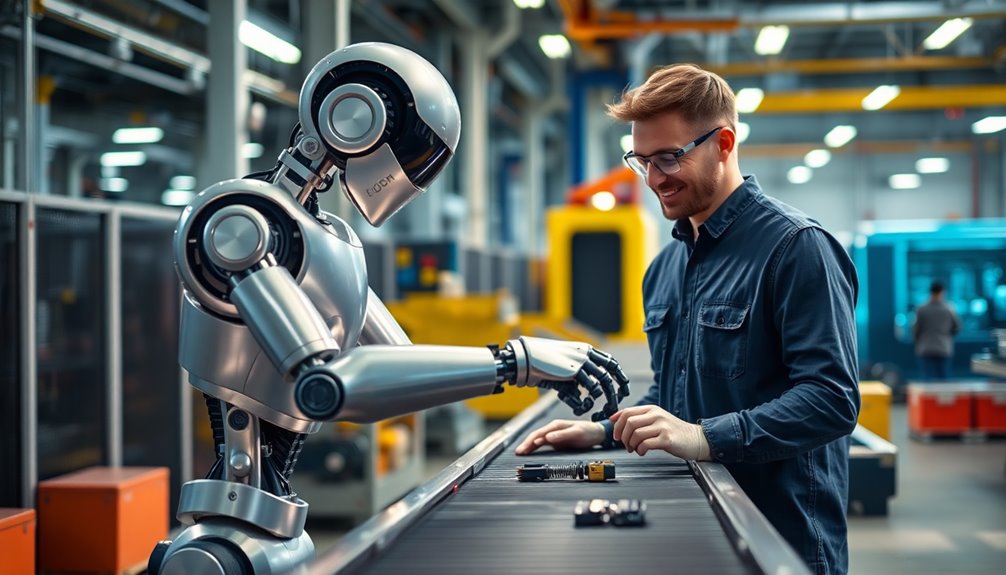
Collaborative robots, or cobots, are transforming the workforce by improving efficiency, productivity, and workplace safety. By automating repetitive tasks, cobots allow employees to focus on more complex, intellectually stimulating responsibilities. This improves job satisfaction and encourages innovation. Furthermore, cobots reduce human error and promote ergonomic practices, ensuring a safer working environment. Their adaptable nature allows for customized solutions across various industries. There are numerous insights to uncover about their impact and future in the workplace.
The Rise of Collaborative Robots in Industry
As industries increasingly seek efficiency and innovation, the rise of collaborative robots, or cobots, has become a significant trend. This surge in cobot adoption represents a pivotal moment in workforce transformation, enabling companies to utilize advanced technology as well as boost human capabilities. By seamlessly integrating with human workers, cobots optimize production processes, reduce operational costs, and raise overall productivity. Their versatility allows for deployment across various sectors, from manufacturing to logistics, driving strategic advantages in a competitive environment.
The adoption of cobots furthermore encourages an agile workforce, empowering employees to focus on higher-value tasks as robots handle repetitive, mundane activities. This shift not only increases job satisfaction but also nurtures a culture of innovation within organizations. As businesses recognize the potential of cobots, they position themselves at the forefront of industrial evolution, ensuring sustained growth and resilience in an ever-changing market.
Understanding the Role of Cobots
Comprehending the role of collaborative robots within the workforce reveals their multifaceted contributions to productivity and employee engagement. Cobots, designed to work in tandem with human operators, exemplify advanced cobot functionality that improves efficiency in various sectors. Their ability to perform repetitive tasks allows human workers to focus on more complex and intellectually stimulating responsibilities, thereby nurturing a dynamic work environment.
The essence of human-robot interaction is central to this evolution. Cobots are engineered with intuitive interfaces and adaptive learning capabilities, enabling seamless integration into existing workflows. This synergy not only amplifies operational output but also cultivates a culture of innovation, as employees engage with technology rather than compete against it. By comprehending the nuanced role of cobots, organizations can leverage their potential to redefine productivity paradigms and raise the workforce experience, creating a significant synergy that propels industries forward.
Key Benefits of Integrating Cobots
Integrating collaborative robots into the workforce offers a range of significant benefits that improve operational efficiency and employee satisfaction. These advantages manifest through improved productivity, as cobots seamlessly assist human workers in repetitive tasks, allowing them to focus on higher-value activities. Effective cobot integration strategies lead to optimized workflows, reducing downtime and increasing output quality.
Moreover, the introduction of cobots positively influences workforce collaboration dynamics, promoting an environment where human ingenuity and robotic precision coexist. This synergy not only accelerates task completion but likewise empowers employees by alleviating their workload, thereby improving job satisfaction and retention.
As organizations embrace advanced automation, they position themselves as leaders in innovation, ready to adapt to evolving market demands. In the end, integrating collaborative robots is not merely a technological upgrade but a strategic advantage that catalyzes growth and boosts overall workplace performance.
Enhancing Safety in the Workplace
The integration of collaborative robots (cobots) in the workplace considerably improves safety by reducing human error and promoting ergonomic practices. By taking on repetitive and physically demanding tasks, cobots minimize the risk of injuries associated with such activities. This shift not just protects workers but additionally cultivates a safer, more efficient work environment.
Reducing Human Error
As organizations increasingly adopt collaborative robots, the potential to reduce human error in the workplace becomes a significant advantage. These advanced systems implement error reduction strategies that boost operational efficiency and raise safety standards. Key benefits include:
- Consistent Performance: Robots maintain precision, minimizing the risk of mistakes.
- Automated Quality Assurance: Continuous monitoring guarantees products meet strict specifications.
- Data-Driven Insights: Real-time analysis allows for quick identification of flaws in processes.
- Improved Focus on Complex Tasks: Human workers can concentrate on critical decision-making rather than repetitive, error-prone tasks.
Promoting Ergonomic Practices
Ergonomics plays a crucial role in improving workplace safety, particularly in environments where collaborative robots operate alongside human workers. By integrating ergonomic assessments into workplace design, organizations can greatly reduce the risk of injuries and improve productivity. These assessments identify potential hazards and inefficiencies, enabling the optimization of workspaces to support both human and robotic tasks. The strategic placement of collaborative robots facilitates a seamless workflow, reducing physical strain on employees. Additionally, thoughtful workplace design promotes better posture and movement, cultivating an environment where safety is paramount. As companies embrace ergonomic principles, they not only protect their workforce but empower them to perform at their highest potential, eventually driving organizational success and resilience in a competitive setting.
Improving Efficiency and Productivity
Even though many industries grapple with the challenges of labor shortages and increasing demand, collaborative robots, or cobots, have emerged as a crucial solution for improving efficiency and productivity. By seamlessly integrating with human workers, cobots drive significant improvements in process optimization and workflow augmentation. Their impact is felt across various sectors, leading to remarkable outcomes, including:
- Increased operational speed, allowing tasks to be completed in less time
- Improved accuracy and consistency, reducing error rates
- Enhanced employee satisfaction by alleviating repetitive tasks
- Greater flexibility in adapting to changing production needs
These advancements enable organizations to utilize the potential of cobots to maintain a competitive edge in a demanding market. As companies embrace this technology, they not only address current labor challenges but also build a more robust and efficient workforce capable of meeting future demands.
Cobots in Manufacturing: A Case Study
The integration of collaborative robots, or cobots, in manufacturing environments has led to significant advancements in operational metrics. This case study highlights how these robots not just improve efficiency but additionally enhance worker safety and create opportunities for skill development among employees. By examining specific examples, one can better understand the transformative impact of cobots on the manufacturing sector.
Increased Efficiency Metrics
Efficiency in manufacturing processes has greatly improved with the integration of collaborative robots, commonly known as cobots. These advanced machines have redefined efficiency benchmarks, driving significant productivity gains across various sectors. Their adaptability allows them to work alongside human operators seamlessly, nurturing a dynamic work environment.
Key metrics illustrating the impact of cobots include:
- Reduced cycle times leading to faster output
- Enhanced precision minimizing errors and waste
- Increased operational hours with non-stop production capabilities
- Higher employee satisfaction from reduced repetitive tasks
Such metrics not just underscore the effectiveness of cobots but additionally signal a transformative shift in manufacturing strategies, propelling companies toward unparalleled operational excellence and competitive advantage.
Worker Safety Improvements
With the rise of collaborative robots, worker safety in manufacturing environments has seen marked improvements. Cobots are engineered to operate alongside humans, greatly enhancing the safety culture within facilities. This synergy encourages worker empowerment by alleviating risks associated with repetitive or hazardous tasks.
| Cobot Features | Safety Benefits |
|---|---|
| Advanced Sensors | Real-time hazard detection |
| Soft Edges | Reduced injury risk |
| Speed Regulation | Controlled interaction speeds |
| Adaptive Learning | Continuous safety protocol updates |
These technological advancements not only protect workers but additionally promote a proactive safety mindset. By integrating cobots, organizations are poised to cultivate a robust safety culture, ensuring a safer and more productive workplace for all.
Skill Enhancement Opportunities
Collaborative robots (cobots) are revolutionizing skill improvement opportunities within the manufacturing sector. By integrating cobots into workflows, companies can conduct careful skill assessments, identifying areas where employees can improve their expertise. This not only promotes individual growth but also drives career advancement within the organization.
The implementation of cobots offers:
- Customized training programs based on skill assessments
- Opportunities for hands-on experience alongside advanced technology
- Improved productivity that allows workers to focus on complex tasks
- Greater job satisfaction through empowerment and skill diversification
As a result, employees are positioned to thrive in an evolving environment, gaining the competitive edge necessary for sustained success and fulfillment in their careers. Cobots are reshaping the workforce, emphasizing the importance of continuous learning and adaptation.
The Impact on Employee Satisfaction
Even though the introduction of collaborative robots (cobots) into the workforce can initially raise concerns about job displacement, studies indicate that they often improve employee satisfaction instead. By automating mundane and repetitive tasks, cobots enable employees to focus on more engaging and intellectually stimulating responsibilities. This shift not just improves job satisfaction but additionally nurtures a greater sense of purpose among workers.
Furthermore, the presence of cobots can lead to increased employee engagement, as individuals are encouraged to collaborate with these advanced technologies rather than compete against them. Employees report feeling more valued and motivated, knowing that their skills are being utilized effectively. Companies that adopt cobots often witness a cultural transformation, where innovation and teamwork flourish, further boosting morale. In this environment, job satisfaction rises, and employees are more likely to contribute to the organization's success, creating a significant synergy between human talent and robotic assistance.
Customization and Flexibility of Cobots
The customization and flexibility of collaborative robots (cobots) offer significant advantages across various industries. Their customized solutions enable businesses to meet specific operational needs, as well as easy programming allows for quick adaptation to changing tasks. Furthermore, rapid reconfiguration and deployment guarantee that cobots can efficiently respond to evolving production demands.
Tailored Solutions for Industries
As industries evolve, the demand for personalized solutions that meet specific operational needs has led to the increasing adoption of collaborative robots (cobots). These advanced machines offer unparalleled versatility, enabling businesses to implement personalized applications that drive efficiency and productivity.
Key attributes of personalized solutions include:
- Adaptability to various tasks across multiple sectors
- Scalability to grow alongside business demands
- Integration with existing systems for seamless operations
- Cost-effectiveness through reduced labor and operational expenses
Easy Programming and Adaptation
Many businesses find that the ease of programming collaborative robots (cobots) greatly improves their adaptability within various operational environments. The incorporation of user-friendly interfaces enables operators to swiftly implement changes, ensuring that cobots can be customized to meet specific production needs. This intuitive programming allows even those with minimal technical expertise to efficiently configure and adjust cobots, maximizing their potential. As a result, organizations can respond more effectively to market demands, enhancing productivity and workforce efficiency. The flexibility to easily reprogram these robots nurtures a dynamic workplace where innovation thrives. In the end, the seamless integration of cobots empowers businesses to boost their operational capabilities, positioning them for sustained competitive advantage in a constantly changing environment.
Rapid Reconfiguration and Deployment
Quickly reconfiguring and deploying collaborative robots (cobots) improves operational efficiency across various industries. Their ability to adapt to changing demands facilitates seamless integration into existing systems, empowering businesses to optimize productivity.
Key advantages include:
- Adaptive workflows: Cobots can swiftly shift between tasks, addressing fluctuating production needs.
- Reduced downtime: Rapid setup minimizes interruptions, ensuring continuous operational flow.
- Cost-effectiveness: Efficient reconfiguration reduces the need for extensive retraining or new equipment investments.
- Scalability: Businesses can easily scale operations up or down to meet market demands without significant lead time.
Training and Skill Development Opportunities
Training and skill development opportunities for employees working alongside collaborative robots are increasingly vital in modern workplaces. As organizations integrate these advanced technologies, they must invest in hands-on workshops and online courses that boost workforce capabilities. Important mentorship programs can guide employees in perfecting new tools and processes, whereas skill assessments guarantee that individual competencies align with organizational goals.
Collaborative projects promote teamwork and innovation, empowering employees to thrive in a tech-driven environment. Cross-training initiatives further improve versatility, allowing workers to navigate various roles efficiently. Additionally, certification programs validate skills acquired through training, increasing employee confidence and marketability.
Strategic industry partnerships can facilitate access to resources and expertise, improving the effectiveness of training initiatives. By prioritizing these development opportunities, companies position their workforce to utilize the full potential of collaborative robots, driving productivity and maintaining a competitive edge in an evolving market terrain.
Overcoming Resistance to Automation
How can organizations effectively address the resistance to automation among employees? By comprehending the underlying employee mindset and tackling automation anxiety head-on, leaders can cultivate a more receptive environment. Strategies to overcome this resistance include:
- Transparent Communication: Clearly articulate the benefits of automation, emphasizing job improvement rather than replacement.
- Involvement in Decision-Making: Engage employees in discussions about automation initiatives, allowing their voices to shape the process.
- Targeted Training Programs: Equip the workforce with the necessary skills to thrive alongside robots, alleviating fears of obsolescence.
- Showcase Success Stories: Highlight cases where automation has improved job satisfaction and productivity, transforming skepticism into enthusiasm.
Future Trends in Collaborative Robotics
Emerging advancements in collaborative robotics are poised to reshape the workforce environment markedly. As industries increasingly recognize the potential of these state-of-the-art technologies, future applications are expected to focus on improved efficiency and productivity. The integration of artificial intelligence and machine learning will enable collaborative robots to perform complex tasks autonomously, substantially reducing human error and operational downtime.
Furthermore, industry collaboration will play a pivotal role in this evolution. By nurturing partnerships between technology developers and manufacturers, organizations will streamline the deployment of collaborative robots across various sectors. This synergy will not just accelerate innovation but will likewise guarantee that these robots are customized to meet specific industry needs, augmenting their utility and effectiveness.
As the environment of work continues to transform, the strategic integration of collaborative robotics will empower businesses to leverage their human capital as they optimize operational capabilities, finally driving competitive advantage.
Real-World Applications of Cobots Across Sectors
As industries increasingly adopt collaborative robots, or cobots, their real-world applications span diverse sectors, enhancing operational efficiency and safety. The seamless integration of cobots into various industries showcases their transformative potential.
Key cobot applications include:
- Manufacturing: Streamlining assembly lines by performing repetitive tasks alongside human workers.
- Healthcare: Assisting in surgeries and patient care, enhancing precision and reducing fatigue.
- Logistics: Automating inventory management and order fulfillment, accelerating delivery times.
- Agriculture: Supporting planting and harvesting processes, optimizing yields during the reduction of labor costs.
Through strategic industry integration, cobots empower the workforce, enabling humans to focus on higher-order tasks. This symbiotic relationship not just raises productivity but also nurtures innovation, reshaping the future environment of work. The rise of cobots signals a new era where efficiency and collaboration redefine operational paradigms across sectors.
Frequently Asked Questions
How Do Collaborative Robots Differ From Traditional Industrial Robots?
In an era reminiscent of the Industrial Revolution, the distinction between collaborative and traditional robots becomes evident. Collaborative robots possess advanced robot capabilities that allow them to work alongside humans seamlessly, whereas traditional robots operate in isolation, often restricted by safety features designed to prevent human interaction. This adaptability enables collaborative robots to respond to dynamic environments, enhancing efficiency as well as ensuring worker safety, thereby redefining the terrain of industrial automation and human-robot collaboration.
What Industries Are Seeing the Fastest Adoption of Cobots?
The fastest adoption of collaborative robots is observed in diverse manufacturing sectors, where efficiency and precision are paramount. These robots streamline production processes, allowing for improved productivity and reduced labor costs. Furthermore, healthcare applications are swiftly integrating cobots, facilitating tasks such as surgery assistance and patient care. This trend reflects a significant shift in the direction of automation, enabling industries to utilize advanced technology for better outcomes and operational excellence, establishing a competitive edge in their respective markets.
Can Cobots Operate in Unstructured Environments?
The capability of collaborative robots (cobots) to operate in unstructured environments raises significant interest. Their flexibility allows cobots to adapt to various unstructured tasks, making them valuable assets across diverse applications. With advancing technology, these machines can navigate unpredictable settings, enhancing operational efficiency. Their ability to perform tasks in dynamic conditions empowers industries to utilize the full potential of automation, driving productivity and innovation in ways previously unattainable.
What Are the Costs Associated With Implementing Collaborative Robots?
The costs associated with implementing collaborative robots involve significant initial investment and ongoing maintenance. Organizations must allocate funds not just for the purchase of the robots but likewise for necessary infrastructure upgrades and employee training. Furthermore, regular maintenance expenses must be considered to guarantee peak performance and longevity. As companies weigh these financial commitments, they must recognize the potential for increased productivity and efficiency that collaborative robots can deliver in the long term.
How Do Cobots Communicate With Human Workers?
In exploring how collaborative robots communicate with human workers, it becomes evident that effective human-robot interaction hinges on sophisticated communication protocols. These protocols facilitate seamless exchanges of information, allowing cobots to interpret human instructions and respond accordingly. By employing sensors, visual recognition, and voice commands, these robots improve operational efficiency during ensuring safety. This dynamic interaction empowers human workers, nurturing a collaborative environment that optimizes productivity and innovation in various industries.