
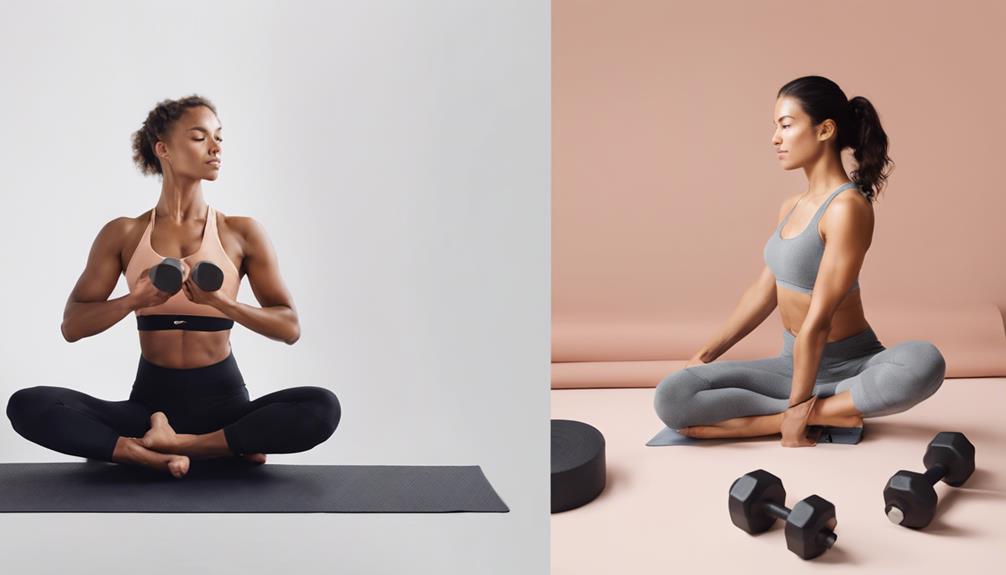
You're on a mission to find a workout routine that actually sticks. First, define your specific, measurable, and attainable fitness goals – write them down to stay motivated! Evaluate your daily schedule to find workout opportunities that fit your lifestyle. Assess your current activity levels, eating habits, and health to set realistic goals that align with your priorities. Consider your fitness level, whether you're a beginner or athlete, and choose exercises accordingly. You're just getting started – stick with it, and you'll be on your way to uncovering a personalized workout routine that suits you perfectly.
Identify Your Fitness Goals
You need to pinpoint what drives you to exercise, so take some time to define your fitness goals, whether it's to lose weight, build muscle, increase endurance, or simply feel more energetic. This is the foundation of your fitness journey, and it's essential to get it right. Your fitness goals will serve as a guiding light, motivating you to push through tough workouts and stay committed to your routine.
To develop a clear fitness philosophy, ask yourself what you want to achieve through exercise. Is it to feel more confident in your own skin, or to have the energy to keep up with your kids? Whatever your reason, make sure it's specific, measurable, and attainable. Goal setting is an important step in this process, as it helps you focus your efforts and track your progress. Write down your goals and post them somewhere visible, so you can remind yourself of what you're working towards.
Assess Your Current Lifestyle
To find your perfect workout routine, you need to take a closer look at your daily life. You'll want to examine your daily schedule to see when you can realistically fit in a workout, make sure your fitness goals align with your current lifestyle, and honestly assess your current activity levels. By doing so, you'll get a clear picture of what's working and what's not, and can start building a routine that truly suits you.
Daily Schedule Analysis
Taking an honest look at your daily schedule is essential in determining how much time you can realistically dedicate to a workout routine. You need to understand your daily habits, commitments, and priorities to find a workout routine that fits seamlessly into your lifestyle. Start by tracking your daily activities, including your morning routines, work hours, social engagements, and personal time. Identify the time slots where you can realistically squeeze in a workout, whether it's early morning, lunch breaks, or evening hours.
Time blocking is a great technique to allocate specific time slots for your workout routine. Allocate a specific time frame for your workout, and treat it as a non-negotiable appointment. Be realistic about how much time you can commit, and don't overestimate your availability. Remember, consistency is key, so it's better to start small and gradually increase your workout time than to set unrealistic goals and risk burnout. By analyzing your daily schedule, you'll be able to identify the perfect time slot for your workout routine, ensuring that you can stick to it in the long run.
Fitness Goals Alignment
By evaluating your current lifestyle, including your eating habits, physical activity level, and overall health, you'll gain a better understanding of what fitness goals are realistic and achievable for you. This self-awareness is important in creating a workout routine that aligns with your unique needs and circumstances. It's essential to acknowledge your strengths, weaknesses, and limitations to set goals that resonate with you.
Mindful alignment of your fitness goals with your lifestyle is significant. Ask yourself, what are your priorities? Do you want to increase energy levels, build strength, or improve overall well-being? Be honest about your motivations and desires. This holistic synergy will help you create a workout routine that complements your lifestyle, rather than conflicting with it. By doing so, you'll be more likely to stick to your routine and achieve long-term success. Remember, it's not about adopting a one-size-fits-all approach, but about crafting a personalized plan that honors your individuality.
Current Activity Levels
Your current activity level is a crucial aspect of your lifestyle that greatly impacts your fitness goals, so it's essential to honestly assess how much physical activity you're getting daily. Take an honest look at your daily routine: are you stuck in sedentary habits, spending most of your time sitting or engaging in low-intensity activities? Or do you have an athletic background, with a natural inclination towards physical activity?
| Current Activity Level | Description |
|---|---|
| Sedentary | Little to no physical activity, mostly sitting or engaging in low-intensity activities |
| Lightly Active | Light exercise/sports 1-3 days/week, such as yoga or short walks |
| Moderately Active | Moderate exercise/sports 3-5 days/week, such as jogging or swimming |
| Very Active | Hard exercise/sports 6-7 days a week, such as intense weightlifting or running |
| Extremely Active | Very hard exercise/sports & physical job or 2x training, such as marathon training |
Understanding your current activity level will help you identify areas for improvement and create a workout routine that suits your needs and goals. Be honest with yourself, and remember that every small step counts towards a healthier, more active you!
Explore Different Workout Types
Now that you've assessed your lifestyle, it's time to explore different workout types that fit your unique needs and preferences. You'll want to try out new exercise methods to see what works best for you, and find a fitness style that you enjoy and can stick to. By experimenting with various options, you'll increase your chances of finding a routine that you'll love and want to maintain in the long run.
Try New Exercise Methods
Shake up your fitness routine by diving into diverse exercise methods, such as Pilates, kickboxing, or even trampoline workouts, to discover what drives you to move and sweat. You might be surprised at how much you enjoy a high-energy Zumba class or a calming yoga session. Trying new exercise methods can help you avoid plateaus and prevent boredom. Plus, it's a great way to meet like-minded people who share your fitness goals.
Consider exploring virtual fitness options, which offer the flexibility to work out from anywhere. You can join online classes, follow fitness influencers, or try apps that guide you through various exercises. This way, you can mix and match different workouts to create a routine that suits your lifestyle.
Holistic movement approaches, such as dance-based workouts or martial arts, can also help you connect with your body and mind. These methods focus on developing strength, flexibility, and coordination while promoting mental well-being. By trying out different exercise methods, you'll be more likely to find what resonates with you and stick to a routine that makes you feel empowered and motivated.
Find Your Fitness Style
From high-intensity interval training (HIIT) to restorative yoga, there's a diverse range of workout types to explore, each catering to unique preferences and fitness goals. You're not limited to one style, and experimenting with different types can help you discover your fitness personality.
Experiment with these workout styles to find your fit:
- Group Fitness: Join a spin class, boot camp, or Zumba session to experience the energy and accountability of working out with others.
- Mind-Body Exercises: Try Pilates, yoga, or tai chi to focus on flexibility, balance, and mental well-being.
- High-Intensity Training: Explore HIIT, CrossFit, or weightlifting to challenge yourself and boost your metabolism.
Consider Your Fitness Level
As you start on your fitness journey, evaluating your current fitness level becomes essential in determining the most effective workout routine for you. Understanding where you are now will help you set realistic goals and choose exercises that are challenging yet achievable. To assess your fitness level, consider taking a fitness test, such as a beep test or a push-up test. These tests will give you a baseline measurement of your endurance, strength, and flexibility.
| Fitness Level | Description |
|---|---|
| Beginner | You're new to exercise or have been inactive for a while. You may need to start with low-impact exercises and gradually increase intensity. |
| Intermediate | You have some experience with exercise, but you're not consistent. You can handle moderate-intensity workouts, but may need to modify exercises to avoid injury. |
| Advanced | You're an experienced exerciser who regularly works out. You can handle high-intensity exercises and are looking to challenge yourself further. |
| Injury Prone | You have a history of injuries or chronic conditions that affect your ability to exercise. You'll need to choose low-impact exercises and consult with a doctor or physical therapist. |
| Athlete | You're an experienced athlete looking to improve performance in a specific sport. You'll need to tailor your workout routine to your sport's specific demands. |
Considering your fitness level will also help you avoid injuries. If you have a history of injuries, you'll want to choose exercises that are low-impact or modified to avoid exacerbating the issue. By understanding your fitness level, you'll be able to create a workout routine that's tailored to your needs and goals, setting you up for success and a stronger sense of belonging in the fitness community.
Schedule It In Your Diary
Plug your workouts into your diary like you would any other non-negotiable appointment, guaranteeing you commit to your fitness goals and make exercise a habitual part of your daily routine. By doing so, you'll avoid the 'I'll do it later' mentality that often leads to missed workouts. Instead, you'll create a sense of accountability and responsibility towards your fitness journey.
Here are three key strategies to help you schedule your workouts effectively:
- Time blocking: Allocate specific time slots for your workouts, just as you would for work meetings or social events. This will help you prioritize your fitness goals and avoid scheduling conflicts.
- Priority setting: Identify your most important workouts and schedule them during your most energetic and focused times of the day. This could be early morning, lunch breaks, or immediately after work.
- Consistency over perfection: Don't be too hard on yourself if you can't fit in a workout at the same time every day. Aim for consistency, and adjust your schedule as needed to ensure you're making progress towards your fitness goals.
Find a Workout Buddy
Having a solid schedule in place, you can now amplify your motivation by finding a workout buddy who shares your fitness goals and can help keep you accountable. Exercising with a buddy provides social support, which is essential for staying committed to your workout routine. With a workout buddy, you'll feel more motivated, inspired, and responsible to show up for your workouts.
Here are some benefits of having a workout buddy:
| Benefits | Description | Example |
|---|---|---|
| Social Support | Having someone to share the experience with | You and your buddy high-five each other after a tough workout |
| Accountability Partner | Someone to keep you on track and motivated | Your buddy texts you to confirm your morning run |
| Moral Boost | A buddy can help you stay positive and focused | Your buddy reminds you of your progress and how far you've come |
| Healthy Competition | A little friendly competition can push you harder | You and your buddy challenge each other to do one more rep |
| Fun Factor | Exercising with a buddy makes it more enjoyable | You and your buddy laugh and chat during your walk |
When searching for a workout buddy, consider asking a friend, family member, or colleague who shares your fitness goals. You can also join a fitness group or class to meet like-minded individuals. Remember, having a workout buddy is not about finding someone to do the work for you, but about having someone to support and motivate you along the way.
Track Your Progress Consistently
Consistently tracking your progress helps you identify patterns, celebrate small victories, and make data-driven decisions to adjust your workout routine. By doing so, you'll gain a deeper understanding of what works best for your body and mind. This mindful reflection allows you to refine your routine, making it more effective and enjoyable.
Here are three ways to track your progress effectively:
- Log your workouts: Write down the exercises, sets, reps, and weight you used. This helps you see how you're progressing and identify areas for improvement.
- Take progress photos: Regular photos can help you visualize changes in your body composition and celebrate small victories.
- Monitor your metrics: Track your weight, body fat percentage, or measurements to see how your body is responding to your workout routine.
Be Patient and Adaptable
Every effective workout routine requires a willingness to adapt to changing circumstances and celebrate small victories along the way. You'll encounter setbacks, plateaus, and unexpected challenges, but it's how you respond that matters. Being patient and adaptable is vital to finding your perfect workout routine.
As you track your progress, you'll identify areas that need tweaking. That's where mindful adjustments come in. Don't be afraid to modify your routine to address new goals, injuries, or changing schedules. These adjustments might seem small, but they can make a significant difference in your overall progress. Take self-reflection moments to assess what's working and what's not. Ask yourself, 'What am I enjoying?' 'What's feeling stale?' 'What do I need to work on?'
By being open to change, you'll avoid burnout and prevent your routine from becoming stagnant. You'll also develop a deeper understanding of your body and its needs. Remember, fitness is a journey, not a destination. Celebrate those small victories, like increasing your water intake or mastering a new exercise. These wins might seem minor, but they'll keep you motivated and engaged.
As you navigate your workout journey, keep in mind that patience and adaptability are essential companions. By embracing these qualities, you'll find a routine that not only works for you but also becomes an integral part of your lifestyle. So, be kind to yourself, stay flexible, and trust the process. Your perfect workout routine is waiting for you.
Frequently Asked Questions
What if I Have a Medical Condition That Affects Exercise?
You're not alone if you have a medical condition that affects exercise. If you have diabetes, you'll want to make adjustments to your workout routine to manage your blood sugar levels. And if you've got an injury, don't worry! You can still exercise with modifications that work for you. It's all about finding ways to adapt and make exercise a part of your life, despite any challenges you're facing. You got this!
Can I Work Out During My Menstrual Cycle?
"Blood, sweat, and tears" might be your motto, but what about when Aunt Flo comes to visit? Can you still crush your fitness goals during your menstrual cycle? Absolutely! In fact, cycle syncing can be a game-changer. As hormone fluctuations occur, you might find you have more energy during certain phases. Listen to your body and adjust your workouts accordingly. You got this, and your body will thank you!
Will I See Results if I Only Work Out at Home?
You’re wondering if you’ll see results from working out at home, and the answer is yes! With a home gym, you’ll experience workout convenience like never before. You’ll save time, avoid crowded gyms, and still get a killer sweat session in. Plus, you can tailor your routine to your needs and goals. As long as you’re consistent and pushing yourself, you’ll start seeing those results you’re after. So, get moving and make your home gym work for you! You can even explore a variety of simple athome workout routines that fit into your schedule, focusing on strength training, cardio, or flexibility. With online resources and apps at your disposal, motivation and guidance are just a click away. Remember, the key to success is finding what you enjoy and keeping your workouts challenging, so you’ll stay committed to your fitness journey.
How Do I Stay Motivated on Days I Don't Feel Like Exercising?
You're stuck in the mud, and getting to the gym feels like an uphill battle. Don't worry, it happens to the best of us! On those sluggish mornings, find your morning motivation by setting a consistent wake-up time and creating a energizing playlist. Share your fitness goals with an accountability partner, and schedule workouts together. This will give you someone to report to, making it harder to hit the snooze button.
Is It Okay to Take Rest Days or Skip Workouts Occasionally?
You're wondering if it's okay to take a step back from your fitness journey occasionally? Absolutely! Listening to your body and mind is essential. Allowing yourself mental breaks and self-care days can actually help you come back stronger and more motivated. Remember, rest is not a weakness, it's a necessity. By giving yourself permission to take a break, you'll avoid burnout and maintain a healthy relationship with exercise.