
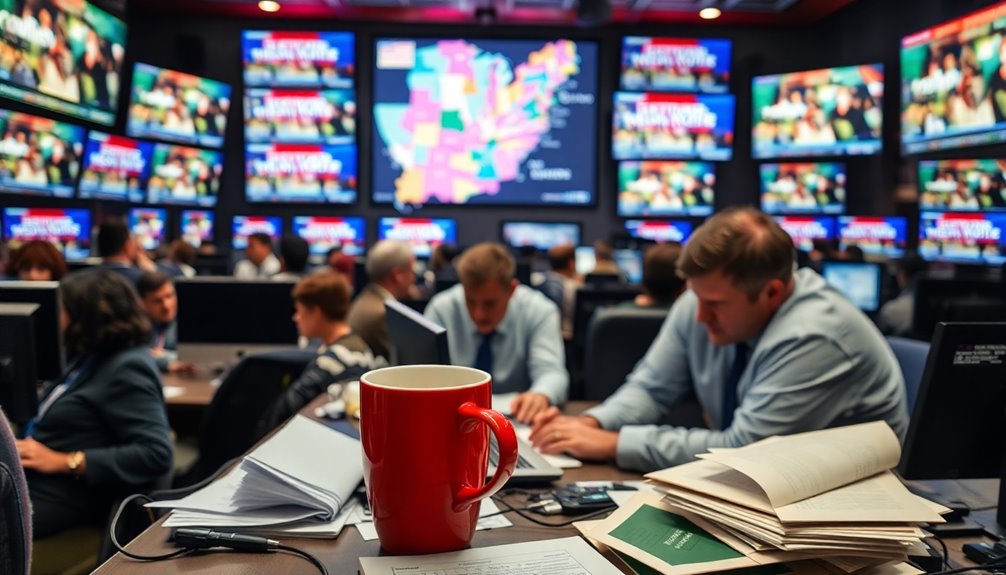
News coverage greatly influences elections and public policy by shaping voter perceptions and highlighting specific issues. Through agenda-setting and framing, media outlets determine which topics gain prominence, impacting public discourse and electoral outcomes. The rise of digital media allows for immediate information dissemination, but it likewise facilitates misinformation and bias. As public trust in media fluctuates, the relationship between news coverage and policy becomes increasingly vital. Investigating this interplay reveals deeper insights into contemporary political dynamics.
The Evolution of News Media and Its Impact on Politics
As the terrain of news media has transformed over the decades, its influence on political dynamics has become increasingly pronounced. This news evolution reflects a shift from traditional print and broadcast outlets to a more diversified environment that includes digital platforms. The media transformation has enabled immediate dissemination of information, empowering voters with real-time updates and analyses. As a result, political candidates have adapted their strategies to engage with audiences across various platforms, recognizing the media's pivotal role in shaping electoral narratives.
Public perception is now heavily influenced by the way news is presented, with sensationalism and framing often guiding voter opinions. The evolution of news media has additionally led to the rise of echo chambers, where individuals consume content that aligns with their beliefs, further polarizing political views. Therefore, the interplay between news media and politics remains a critical factor in comprehending contemporary electoral processes and public policy formation.
The Role of Digital Media in Shaping Public Opinion
Digital media plays an essential role in shaping public opinion during elections, particularly through the influence of social media platforms. These platforms facilitate the rapid spread of information and misinformation, impacting voter perceptions and decisions. Furthermore, engagement metrics on digital media can greatly affect how candidates and issues are portrayed to the public.
Social Media Influence
Although traditional media has long influenced public opinion, social media has emerged as a powerful force in shaping political narratives and voter perceptions. Platforms like Twitter, Facebook, and Instagram utilize social media algorithms that prioritize content based on user engagement, amplifying certain messages and suppressing others. This phenomenon allows political campaigns to target specific demographics effectively. Moreover, influencer endorsements have become vital in reaching younger audiences, as trusted figures can sway opinions and mobilize support. Social media's interactive nature encourages real-time discussions, enabling voters to engage with candidates and policies directly. As a result, the impact of social media on elections and public policy continues to grow, redefining how information is disseminated and consumed in the political arena.
Misinformation Spread
How does misinformation spread in the digital age, and what are its implications for public opinion? The rapid dissemination of information through social media platforms facilitates the spread of misinformation campaigns, often blurring the lines between fact and fiction. This environment allows false narratives to gain traction, influencing perceptions and beliefs among the public. In response, fact-checking initiatives have emerged as vital tools to combat misinformation, aiming to verify claims and provide accurate information. Nonetheless, the effectiveness of these initiatives is often undermined by the sheer volume of misleading content and the speed at which it circulates. As a result, the interplay between misinformation and public opinion poses significant challenges for informed democratic discourse, impacting elections and policy decisions.
Engagement Metrics Impact
What factors contribute to the influence of engagement metrics on public opinion in the digital environment? Engagement metrics, such as likes, shares, and comments, provide insight into audience preferences and behaviors. These data points guide media outlets in developing effective engagement strategies that resonate with target demographics. By analyzing audience analytics, content creators can customize their messaging to amplify reach and impact. This personalized approach promotes a sense of community and involvement, leading to increased public interest and participation in political discourse. As a result, engagement metrics not merely reflect public sentiment but actively shape it, with the potential to sway opinions and influence electoral outcomes. In the end, comprehending these dynamics is essential for grasping how digital media affects contemporary public opinion.
Framing Candidates: The Power of Narrative
As narratives shape public perception, the framing of candidates in election coverage becomes an essential element in influencing voter opinions. Candidate portrayal is often crafted through narrative construction, where the media highlights specific traits, experiences, and viewpoints. This selective emphasis can greatly affect how voters perceive a candidate's competence, trustworthiness, and relatability.
For instance, a candidate presented as a savior may attract support, whereas one framed as controversial may repel potential voters. Such framing contributes to the public's comprehension of candidates and influences the overall election narrative.
Moreover, the influence of narrative extends beyond mere description; it shapes the context in which candidates are discussed, impacting voter emotions and decision-making processes. Therefore, the interplay of narrative construction and candidate portrayal plays an essential role in shaping election outcomes and determining public policy directions.
Agenda-Setting: What Issues Are Highlighted?
Although the media does not dictate voter opinions outright, it plays a crucial role in agenda-setting by determining which issues receive prominence in election coverage. This process of issue prioritization greatly shapes public discourse, as the media's focus can elevate certain topics while sidelining others. For instance, when news outlets spotlight economic concerns, voters may prioritize candidates addressing these issues, thereby influencing electoral outcomes.
Media influence extends beyond mere reporting; it frames the narrative surrounding key topics, impacting how the public perceives their importance. By consistently highlighting specific issues, the media can create a sense of urgency and relevance, prompting voters to engage with those subjects. As a result, the issues that dominate election coverage often reflect the media's choices rather than a thorough representation of public concern. In the end, this agenda-setting function underscores the profound impact media has on shaping the political environment and guiding voter priorities.
The Influence of Social Media on Electoral Dynamics
With the rise of social media, electoral dynamics have undergone a significant transformation, reshaping how candidates engage with voters and how information is disseminated. Social media platforms allow candidates to reach vast audiences instantly, utilizing customized content driven by social media algorithms that prioritize engagement. This enables political messages to spread swiftly, often bypassing traditional media gatekeepers.
Moreover, influencer endorsements have emerged as an influential tool in modern campaigns. Influencers, with their established follower bases, can sway public opinion and mobilize younger voters who may be disengaged from conventional political discourse. By leveraging these endorsements, candidates can improve their visibility and credibility among specific demographics.
The interplay of social media and electoral strategies illustrates a shift in how political narratives are crafted and consumed, highlighting the significance of digital engagement in contemporary elections. Consequently, social media has become a crucial component in shaping electoral outcomes and public policy discussions.
Media Bias and Its Effect on Voter Perception
The influence of social media on electoral dynamics has brought attention to the role of media bias in shaping voter perceptions. Media representation can greatly affect how candidates and issues are viewed by the public. When certain viewpoints or narratives are emphasized over others, voters may develop skewed interpretations of political realities. For instance, biased reporting might lead to an exaggerated perception of a candidate's strengths or weaknesses, influencing voter sentiment and decision-making.
Moreover, the selective coverage of particular events can create an echo chamber, reinforcing existing beliefs as well as marginalizing opposing perspectives. This phenomenon can result in polarized voter bases, diminishing the potential for constructive dialogue. As media outlets often cater to specific ideologies, their influence on voter perception becomes increasingly critical in contemporary elections. Grasping these dynamics is crucial for voters seeking to navigate the intricacies of information in the digital age.
The Interplay Between News Coverage and Public Policy
The relationship between news coverage and public policy is complex and significant. Media outlets can shape legislative priorities by focusing on specific issues, thereby influencing public perception and, in turn, governmental response. Reporting bias may further affect how policies are perceived, highlighting the critical role of journalism in the political arena.
Media Influence on Policy
Numerous studies highlight the significant influence of media coverage on public policy by shaping public perception and agenda-setting. The media serves as an essential intermediary, guiding the public's comprehension of policy issues and influencing governmental priorities. When media outlets emphasize certain topics, they improve media accountability, compelling policymakers to address these issues. In addition, transparent reporting can cultivate trust between the public and government institutions, as citizens become more informed about policy decisions and their implications. This interaction underscores the importance of responsible journalism, which not only informs the electorate but also holds policymakers accountable. Ultimately, the interplay between media coverage and public policy is fundamental for nurturing an engaged and informed citizenry, leading to a more responsive government.
Reporting Bias and Impacts
Though media coverage plays a critical role in shaping public perceptions of policy, reporting bias can greatly distort this influence. Such bias may arise from selective reporting, framing issues in a particular light, or favoring certain viewpoints over others. This distortion undermines reporting ethics, which emphasize fairness and impartiality in journalism. As a result, biased reporting can mislead the public, skewing their comprehension of critical issues and ultimately affecting public policy outcomes. The need for media accountability is paramount; journalists and news organizations must be held responsible for their choices in coverage. By promoting transparency and adherence to ethical standards, the media can better serve its role in democracy, ensuring that the public receives accurate information necessary for informed decision-making.
Public Perception Shaping Legislation
As public opinion increasingly shapes the legislative process, the role of news coverage in influencing societal perceptions cannot be understated. Media outlets play a critical role in shaping public sentiment, which directly impacts legislation outcomes. Heightened voter awareness can lead to increased civic engagement, whereas effective coverage can clarify policy debates. Nevertheless, the rise of information overload complicates issue prioritization, often leaving citizens overwhelmed and confused. Trust in media sources is paramount; when media trust erodes, public perception falters, affecting policy discussions. The following table illustrates key factors connecting news coverage to public perception and legislative action:
| Factor | Impact on Public Perception | Legislative Outcome |
|---|---|---|
| Media Trust | Improves credibility | Promotes informed decisions |
| Civic Engagement | Boosts participation | Influences policy direction |
| Information Overload | Causes confusion | Hinders effective debate |
| Voter Awareness | Informs electorate | Shapes legislative priorities |
| Issue Prioritization | Directs public discussion | Affects policy focus |
Case Studies: Media Coverage in Notable Elections
Media coverage plays a pivotal role in shaping public perception during elections, influencing voter behavior and outcomes. Case studies highlight how media narratives can impact election outcomes markedly. For instance, the 2008 U.S. presidential election showcased how favorable coverage of Barack Obama's campaign helped build a positive public image. Conversely, the 2016 election illustrated how negative media narratives surrounding Hillary Clinton affected voter perception.
Key examples of media influence in elections include:
- The role of televised debates in changing public opinion.
- The impact of social media in amplifying certain narratives.
- Coverage of campaign rallies shaping candidate visibility.
- The effect of breaking news on voter sentiment.
- The influence of fact-checking on candidate credibility.
These instances demonstrate the critical relationship between media coverage and election outcomes, emphasizing the need for voters to critically evaluate the narratives presented to them.
The Future of News Coverage and Its Political Implications
The terrain of news coverage is evolving quickly, influenced by technological advancements and shifting audience preferences. Future technologies promise to improve audience engagement, allowing for real-time interactions and personalized content delivery. Nevertheless, this shift raises critical questions regarding ethical journalism and the platform responsibility of news organizations.
| Aspect | Implications |
|---|---|
| Transparency Initiatives | Cultivate public trust in media |
| Fact Checking Importance | Combat misinformation in reporting |
| News Literacy | Empower citizens for informed civic participation |
Collaborative reporting may additionally emerge as a crucial avenue, enabling journalists to pool resources and expertise. As audiences demand greater accountability, news organizations must prioritize transparency and ethical standards. By doing so, they can strengthen public trust while promoting informed civic participation in the democratic process. In the end, the future of news coverage will greatly influence political discourse and public policy.
Frequently Asked Questions
How Does News Coverage Influence Voter Turnout in Elections?
Research indicates that areas with increased news coverage can see voter turnout rise by as much as 10%. This highlights the significance of effective voter engagement strategies. In addition, media bias analysis reveals that how news is presented may sway public perception, potentially influencing turnout. When voters perceive media coverage as balanced and informative, they are more likely to participate in elections, underscoring the critical role of news in shaping civic engagement.
What Role Do Fact-Checkers Play in News Reporting During Elections?
Fact-checkers play an essential role in news reporting during elections by employing various fact-checking methods to verify the accuracy of claims made by candidates and political entities. Their efforts help combat election misinformation, ensuring that voters receive reliable information. By scrutinizing statements and providing context, fact-checkers contribute to a more informed electorate, promoting transparency and accountability in the political process. This eventually improves the integrity of the democratic system during electoral campaigns.
How Do Journalists Choose Which Stories to Cover During an Election?
In the complex terrain of journalism, story selection often reflects priorities and biases. Journalists weigh audience interest against the significance of events, aiming for balance yet falling prey to coverage bias. They may favor sensational narratives over nuanced discussions, shaping public perception. As they navigate the intricate web of political dynamics, the choices made in what to cover can amplify certain voices during silencing others, in the end influencing the broader discourse surrounding elections.
What Impact Do Opinion Polls Have on Media Coverage and Public Perception?
Opinion polls greatly influence media coverage and public perception. When polls indicate a candidate's strong performance, media outlets often amplify this narrative, potentially leading to media bias that favors perceived frontrunners. Conversely, less favorable poll results may be downplayed. The accuracy of these polls plays an essential role; misleading data can skew public opinion and create a false sense of momentum, further complicating the relationship between polling, coverage, and voter sentiment.
How Does Media Literacy Affect Citizens' Understanding of News Coverage?
Media literacy greatly improves citizens' comprehension of news coverage. By nurturing critical thinking, individuals become adept at recognizing media bias, allowing them to analyze information more effectively. This awareness helps them discern between factual reporting and opinion-driven narratives, leading to informed decision-making. As citizens develop these skills, they are better equipped to navigate the intricacies of news media, eventually contributing to a more engaged and knowledgeable public capable of questioning and interpreting information critically.