
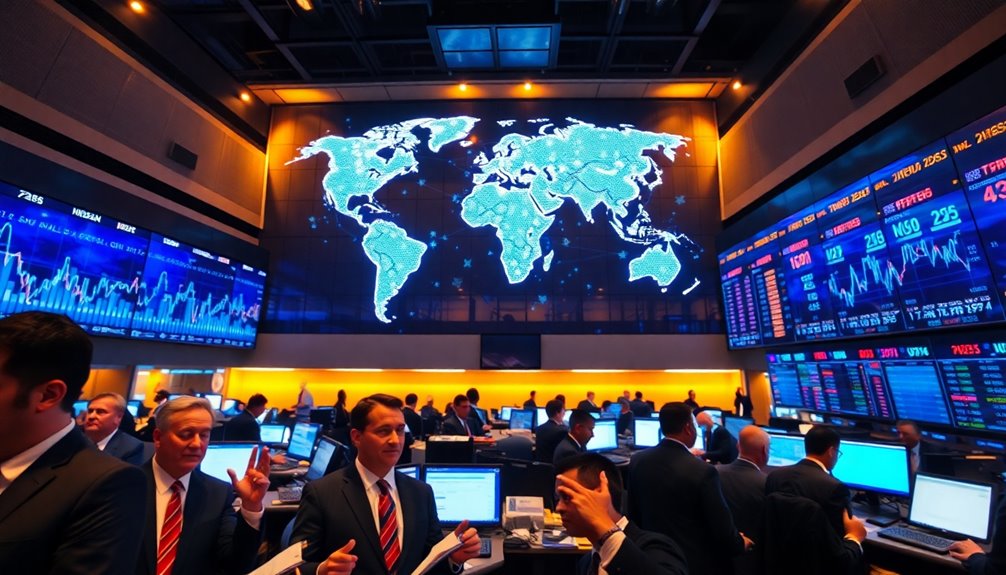
Economic trends, such as the rise of e-commerce and shifts in consumer behavior, are transforming the global market. E-commerce increases demand for efficient supply chains and digital payments. Meanwhile, labor markets are adapting because of globalization and technological advancements, creating a skills gap. Inflation affects consumer spending patterns, prioritizing crucial goods. Geopolitical factors further shape business strategies, impacting trade agreements and market access. To fully grasp these dynamics, further exploration of each trend would be enlightening. Understanding these complex interactions is essential for businesses aiming to compete effectively in the ever-evolving marketplace. Specifically, global economic transformations in 2023 are likely to influence investment strategies and operational models significantly. Companies must be agile in their response to these shifts, leveraging technology and innovative practices to meet changing consumer expectations and navigate geopolitical uncertainties.
The Rise of E-Commerce and Its Impact on Global Trade
As e-commerce continues to expand globally, its influence on international trade becomes increasingly significant. The rise of online shopping has transformed consumer behavior, leading to a surge in demand for digital payments and streamlined purchasing processes. This shift not only improves convenience for consumers but also intensifies market competition among businesses working to capture a share of the digital marketplace. Companies are now re-evaluating their supply chains to accommodate the rapid pace of e-commerce, ensuring that products are delivered efficiently and timely. Global logistics have become essential in managing these demands, as businesses navigate cross-border shipping and customs challenges. As a result, the interconnected nature of international trade is evolving, with e-commerce serving as a catalyst for innovation and adaptation. Finally, the impact of e-commerce on global trade underscores the necessity for businesses to remain agile in an ever-changing economic environment.
Labor Market Shifts in a Globalized Economy
Although globalization has facilitated the movement of goods and services across borders, it has likewise profoundly altered labor markets worldwide. The rise of remote work has broadened labor mobility, allowing individuals to seek employment opportunities beyond geographical constraints. Nevertheless, this shift has also highlighted a significant skills gap, as workers must adapt to new technologies and practices to remain competitive. As a result, companies face challenges in filling roles that demand specialized skills, exacerbating wage disparity between skilled and unskilled labor. Furthermore, workforce automation continues to transform job functions, leading to both job displacement and the creation of new roles. As organizations adapt, they are increasingly focusing on enhancing employee benefits to attract and retain talent in a competitive environment. In the end, these labor market shifts necessitate a re-evaluation of workforce strategies to guarantee sustainability and growth in a globalized economy.
The Role of Inflation in Consumer Spending Behavior
Inflation greatly influences consumer spending behavior, as rising prices can erode purchasing capacity and alter financial priorities. When consumers anticipate higher inflation, their inflation expectations often lead them to adjust spending habits. As prices increase, individuals may prioritize vital goods over discretionary items, markedly changing consumption patterns. This shift can result in decreased overall consumer confidence, as uncertainty about future economic conditions may cause individuals to save rather than spend.
Moreover, persistent inflation can weaken consumer confidence, creating a cycle where reduced spending further dampens economic growth. Consumers may delay major purchases, fearing that their money will hold less value over time. As a result, businesses may face declining revenues, prompting them to reevaluate pricing strategies and marketing efforts. Comprehending the intricate relationship between inflation, consumer expectations, and spending behavior is fundamental for businesses aiming to navigate the challenges of the global market effectively.
Technological Advancements and Their Influence on Market Dynamics
Rising inflation and shifting consumer priorities have created a dynamic environment where technological advancements play a pivotal role in shaping market dynamics. Companies increasingly leverage artificial intelligence to improve efficiency and personalize customer experiences, responding to evolving demands. This integration of AI enables businesses to analyze vast amounts of data, optimizing decision-making and forecasting trends more accurately.
Moreover, digital transformation has become crucial as organizations adapt to new consumer behaviors and preferences. By embracing digital tools and platforms, companies can streamline operations and improve service delivery, eventually leading to greater customer satisfaction.
This technological evolution is not merely a competitive advantage; it has become a necessity for survival in a swiftly changing environment. As businesses continue to innovate and adapt, the influence of technological advancements on market dynamics will only intensify, driving growth and reshaping industries worldwide.
Geopolitical Factors Affecting International Business Strategies
As companies expand their operations across borders, grasping geopolitical factors becomes essential for shaping effective international business strategies. Trade agreements greatly influence market access and competitive positioning. These agreements can facilitate smoother operations, but they additionally require firms to navigate varying regulatory environments that differ by region.
Political instability poses extra challenges, as it can disrupt supply chains and affect consumer confidence. Companies must assess the risks associated with entering markets characterized by uncertain political climates. In addition, currency fluctuations can impact pricing strategies and profit margins, making financial forecasting more complex.
To succeed, businesses must remain adaptable and informed about these geopolitical dynamics. By comprehending the interconnectedness of trade agreements, political stability, and economic conditions, firms can devise strategies that both mitigate risks and capitalize on opportunities in the global market. This proactive approach eventually improves their ability to thrive in a constantly changing international environment.
Frequently Asked Questions
How Do Cultural Differences Impact Global Market Trends?
Cultural differences greatly impact global market trends by influencing consumer behavior and preferences. Companies must understand and respect cultural values to effectively engage diverse audiences. Successful market adaptation requires tailoring products and marketing strategies to reflect local customs and traditions. For instance, a brand's messaging may need modification to resonate with varying cultural expectations. In the end, acknowledging these differences promotes stronger connections with consumers, leading to improved brand loyalty and market success.
What Role Do Small Businesses Play in the Global Economy?
Ironically, during periods when large corporations often dominate headlines, small businesses quietly drive the global economy. These enterprises nurture small business innovation, creating unique products and services that cater to niche markets. Their impact extends beyond local communities, as they contribute considerably to local economic growth. By providing employment and stimulating entrepreneurship, small businesses play an essential role in economic resilience, proving that sometimes the smallest players can make the biggest difference on the global stage.
How Do Environmental Policies Influence International Trade?
Environmental policies greatly influence international trade by promoting sustainable practices. Nations that prioritize eco-friendly regulations often negotiate trade agreements that favor suppliers committed to sustainability. These policies encourage businesses to adopt greener methods, enhancing their competitiveness in global markets. Furthermore, compliance with stringent environmental standards can create barriers for companies unable to meet these requirements, thereby shaping trade dynamics and encouraging a shift in the direction of more responsible production and consumption patterns worldwide.
What Are the Effects of Currency Fluctuations on Global Markets?
Currency fluctuations greatly impact global markets by introducing currency risk, which affects businesses engaged in international trade. When exchange rates fluctuate, the value of goods and services can change, leading to potential losses or gains for exporters and importers. Companies may face challenges in pricing, profit margins, and competitiveness. Moreover, such fluctuations can influence investment decisions, as investors assess the stability of currencies before committing to foreign markets, ultimately shaping economic relationships worldwide.
How Do Consumer Preferences Vary Across Different Regions?
Consumer preferences exhibit significant regional variations, illustrated by the fact that online shopping sales in Asia accounted for nearly 50% of the global total in 2022. In regions like North America, there is a growing demand for luxury goods, whereas European consumers often prioritize sustainability. Comprehending these differences allows businesses to tailor their marketing strategies effectively, ensuring they meet the distinct needs and desires of diverse consumer bases across the globe.