
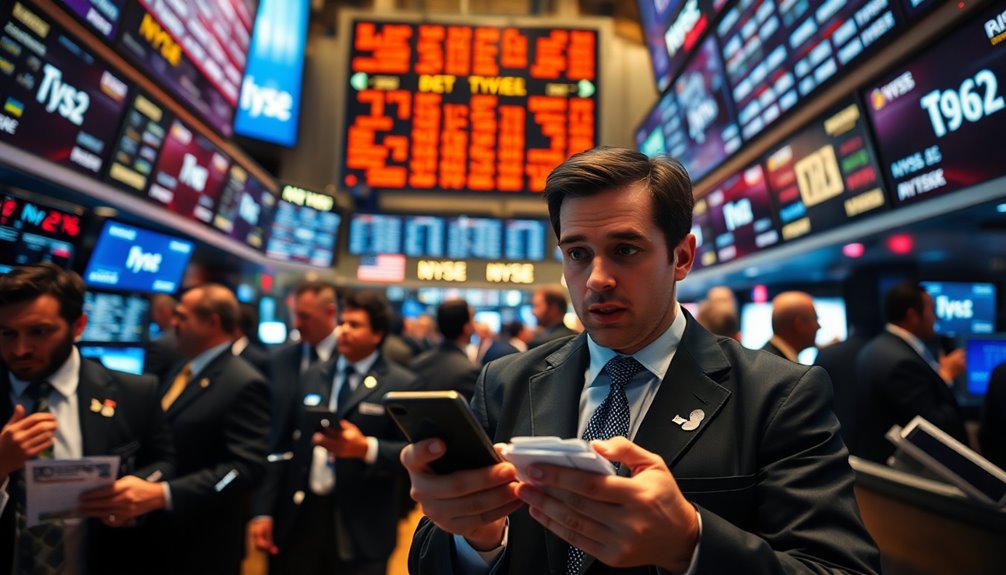
Breaking news markedly influences financial markets, triggering immediate reactions that reflect investor sentiment. Market sensitivity varies by news type, including corporate announcements, geopolitical events, and economic indicators. Social media amplifies this effect through rapid information dissemination, whereas misinformation can create volatility. Investor emotions like fear and optimism often drive decisions, leading to overreactions. Comprehending these dynamics is essential for strategic planning. An exploration of historical examples will further illuminate the nuances of market responses to breaking news.
Understanding Market Sensitivity to News Events
As market participants constantly analyze information, grasping of market sensitivity to news events becomes fundamental. The timing of a news event can markedly influence market reactions, often acting as a catalyst for rapid price changes. Investors closely monitor various channels to determine how fresh information may act as market volatility triggers. For instance, economic reports released ahead of schedule can provoke immediate responses, whereas rumors or leaks may create uncertainty and amplify fluctuations.
Market sensitivity is not uniform; different sectors and asset classes react distinctly based on their exposure to specific news events. Some sectors are more susceptible to geopolitical developments, whereas others may respond to corporate earnings announcements. Comprehending these dynamics allows market participants to anticipate potential shifts and manage risk effectively. In the end, recognizing the interplay between news event timing and market volatility is vital for informed decision-making in the fast-paced world of finance.
Types of News That Influence Financial Markets
Various types of news greatly influence financial markets, impacting investor sentiment and decision-making. Corporate announcements often serve as key indicators of a company's health, whereas earnings reports provide insights into profitability, directly affecting stock prices. Geopolitical events can cause volatility, as tensions or conflicts may lead to market speculation regarding future economic stability. Regulatory changes also play a vital role, as new laws can dramatically alter operational environments for businesses. Natural disasters can disrupt supply chains, leading to fluctuations in stock values. Furthermore, inflation reports and interest rate changes are essential economic indicators that shape investor expectations and market behavior. Technological advancements can drive innovation and growth, influencing consumer sentiment and investment strategies. Each of these factors contributes to a complex web of influences that investors must navigate in their decision-making processes.
The Role of Social Media in Market Reactions
Social media has transformed how information is disseminated, allowing breaking news to reach investors instantaneously. The influence of prominent figures on these platforms can greatly sway market trends and investor behavior. Furthermore, analyzing market sentiment through social media interactions provides valuable insights into public perception and potential market movements.
Instant Information Dissemination
Even though traditional news outlets have long been the primary source of financial information, the rise of social media has transformed how quickly and broadly news is disseminated, often leading to immediate market reactions. Platforms like Twitter and Facebook serve as real-time alerts, enabling investors to receive breaking news almost instantaneously. This rapid communication can trigger swift trading actions, as market participants respond to events before conventional news sources can publish detailed analyses. Furthermore, news aggregation tools compile information from various social media channels, providing an extensive view of market sentiment. As a result, the immediacy of social media influences both the speed of information flow and the volatility of financial markets in response to breaking news.
Influencer Impact on Trends
How do influencers shape market trends in the age of social media? Influencers wield significant influence in shaping consumer behavior and financial market trends. Their credibility often dictates how quickly and effectively trends can be forecasted, impacting investor decisions. As real-time information spreads through platforms like Twitter and Instagram, influencers can sway public perception and market dynamics.
- Influencer credibility boosts trust in product launches and market movements.
- Rapid dissemination of information allows for immediate market reactions.
- Trend forecasting becomes more reliant on influencer-driven narratives.
Thus, the role of influencers in financial markets is not merely a fad; it is a strategic factor that investors increasingly consider when steering through market volatility.
Market Sentiment Analysis
As market participants increasingly turn to social media for information, the analysis of market sentiment has become essential for grasping market reactions. Social media platforms serve as real-time barometers of investor behavior, reflecting immediate responses to breaking news. This dynamic environment amplifies news volatility, as rapid dissemination of information can lead to swift market movements. Investors often gauge sentiment through trending topics, hashtags, and public opinion, which can influence trading decisions. As a result, comprehending market sentiment derived from social media allows analysts to predict potential market shifts, providing insights into the psychology driving investor behavior. By monitoring social media activity, financial professionals can better navigate the intricacies of market reactions in response to breaking news events.
Analyzing Investor Sentiment During Breaking News
Investor sentiment plays an essential role in shaping market reactions to breaking news. By employing sentiment analysis techniques, analysts can gauge how news events influence investor behavior and decision-making. Historical trends further illustrate the impact of sentiment on market fluctuations during significant news occurrences.
Market Reactions to News
What drives market reactions during moments of breaking news is a complex interplay of emotions and rational evaluations among traders and investors. The immediate response often reflects heightened news volatility, which can lead to rapid price fluctuations. Investor sentiment can swing considerably depending on the nature of the news, influencing overall market confidence.
- Fear and Panic: Negative news can trigger fear, prompting sell-offs.
- Optimism and Hope: Positive developments can inspire confidence and buying activity.
- Cognitive Bias: Investors may overreact to news, skewing market perceptions.
These emotional responses and evaluations shape market movements, demonstrating how breaking news can destabilize or bolster market confidence, ultimately influencing trading strategies and investment decisions.
Sentiment Analysis Techniques
As breaking news can swiftly shift market dynamics, employing sentiment analysis techniques offers a structured approach to gauge investor reactions. These techniques typically involve sentiment scoring, where qualitative data from news articles and social media is quantified. By categorizing news, investors can better understand how different events impact market sentiment.
| News Source | Sentiment Score | Category |
|---|---|---|
| Financial Times | +0.7 | Positive |
| Bloomberg | -0.5 | Negative |
| Reuters | 0.0 | Neutral |
| Wall Street Journal | +0.4 | Positive |
| CNBC | -0.2 | Negative |
Through effective news categorization, market participants can anticipate potential changes in stock prices, enhancing their decision-making during volatile periods.
Historical Trends Overview
Analyzing historical trends in investor sentiment during breaking news events reveals significant patterns that can influence market behavior. These historical patterns demonstrate how news can trigger immediate reactions, often resulting in heightened market volatility. Investors frequently respond to breaking news with either panic selling or speculative buying, which can distort stock prices temporarily.
- Historical events, such as economic crises or political upheavals, often lead to pronounced shifts in sentiment.
- Patterns of overreaction are common, where initial market movements do not reflect the long-term impact of the news.
- Recovery phases typically follow these events, showing a return to stability as investor sentiment normalizes.
Understanding these dynamics can provide valuable insights for anticipating market responses during future breaking news scenarios.
Historical Examples of News Impacting Stock Prices
Throughout history, significant news events have often led to dramatic fluctuations in stock prices, illustrating the sensitivity of financial markets to real-time information. One notable example occurred on October 19, 1987, known as Black Monday, when the Dow Jones Industrial Average plummeted by over 22% in a single day. This market volatility was largely triggered by a combination of rising interest rates and geopolitical tensions, which amplified the impact of news cycles on investor sentiment.
Another instance was the announcement of the 2008 financial crisis, which sent shockwaves through global markets. Major banks' failures and government bailouts dominated headlines, causing panic selling and significant declines in stock prices. These examples demonstrate how breaking news can swiftly alter market conditions, highlighting the intricate relationship between news cycles and investor behavior. Financial markets remain highly reactive, showcasing their vulnerability to external information and events.
The Impact of Economic Indicators on Market Trends
Economic indicators serve as critical barometers for market trends, influencing investor sentiment and decision-making. As key data is released, market reaction dynamics reveal how swiftly and considerably prices can adjust to new information. Long-term trend analysis further highlights the importance of these indicators in forecasting future market behavior and potential investment opportunities.
Key Economic Indicators
Although various factors influence financial markets, key economic indicators play a crucial role in shaping market trends. These indicators provide insights into the overall health of an economy and can forecast market movements. For instance, fluctuations in GDP changes often reflect economic growth or contraction, impacting investor confidence. Furthermore, inflation rates and employment statistics influence consumer spending patterns, which can lead to shifts in interest rates set by monetary policy.
- Trade balance affects currency strength and impacts global investments.
- Fiscal policy decisions can drive market volatility and investor sentiment.
- Comprehension of these indicators helps investors make informed decisions about potential market trends.
Market Reaction Dynamics
Market reactions to breaking news are often influenced by the key economic indicators previously discussed. These indicators serve as benchmarks that help investors gauge market volatility during news cycles. For instance, strong employment data may lead to bullish trends, while poor GDP figures can trigger sell-offs. Comprehending these dynamics is essential for maneuvering financial markets.
| Economic Indicator | Market Reaction |
|---|---|
| Unemployment Rate | Decrease in market confidence, potential sell-off |
| Inflation Rate | Increased volatility, possible interest rate hikes |
| Consumer Spending | Positive sentiment, bullish market trends |
| Manufacturing PMI | Indicator of economic health, influences investor decisions |
Long-term Trend Analysis
When evaluating long-term market trends, it becomes evident that economic indicators play a vital role in shaping investor sentiment and strategic decision-making. These indicators are critical for long-term forecasting, as they help identify patterns that may influence market movements over extended periods. Comprehending the implications of these indicators can lead to more informed investment strategies and trend sustainability.
- GDP growth rates reflect overall economic health.
- Unemployment figures indicate labor market conditions.
- Inflation rates affect purchasing strength and spending behavior.
The Importance of Timing in News Reporting
Effective news reporting hinges on timing, as the immediate dissemination of information can greatly influence market reactions. In the fast-paced world of finance, breaking news requires rapid updates to guarantee that stakeholders can make informed decisions. News timing plays an essential role; even a slight delay in reporting can lead to significant financial implications, as markets may react based on incomplete information.
Moreover, reporting accuracy is paramount; inaccurate or misleading information can exacerbate market volatility. Journalists and financial analysts must navigate tightly wound news cycles to deliver timely, reliable updates that stakeholders can trust. The interplay between news timing and reporting accuracy directly affects how investors perceive risk and opportunity, ultimately shaping market behavior. To sum up, the importance of timing in news reporting cannot be overstated, as it serves as a crucial link between information dissemination and market dynamics.
How Market Analysts Interpret Breaking News
Breaking news serves as a critical catalyst for market analysts, who carefully assess the information to gauge its potential impact on financial markets. The process of breaking news interpretation involves a systematic approach, enabling analysts to formulate strategies that respond effectively to unfolding events.
Key aspects of their interpretation include:
- Contextual Analysis: Comprehending the broader economic and political context surrounding the news.
- Quantitative Assessment: Evaluating data and trends to predict market movements.
- Sentiment Evaluation: Gauging investor sentiment to anticipate market reactions.
The Psychological Effects of News on Traders
Although financial news is often seen as a mere collection of data points, it profoundly influences the psyche of traders, shaping their decisions and strategies. Traders are susceptible to cognitive biases, which can distort their perception of information and lead to irrational choices. Emotional trading often exacerbates these biases, causing traders to react impulsively to news instead of analyzing it objectively.
| Cognitive Bias | Description | Impact on Trading |
|---|---|---|
| Confirmation Bias | Favoring information that confirms beliefs | Ignoring contradictory data |
| Overconfidence | Believing one has superior knowledge | Taking excessive risks |
| Anchoring | Relying too heavily on first impressions | Misjudging market potential |
| Herd Behavior | Following the crowd | Contributing to market volatility |
Understanding these psychological effects enables traders to recognize their own tendencies, potentially leading to more informed and rational decision-making in the face of breaking news.
Strategies for Investors to Mitigate Risk From News Events
Even though news events can create significant volatility in financial markets, investors can adopt several strategies to mitigate associated risks. By implementing effective risk assessment techniques and embracing news diversification, investors can improve their resilience to unpredictable market shifts.
- Diversify Portfolios: Spread investments across various sectors and asset classes to reduce reliance on any single news event.
- Stay Informed: Regularly monitor credible news sources to understand potential market impacts and adjust strategies accordingly.
- Utilize Stop-Loss Orders: Set predetermined sell points to limit potential losses during abrupt market reactions to breaking news.
These strategies equip investors with tools to navigate the intricacies of news-driven volatility. By prioritizing risk assessment and maintaining a diversified approach, they can better safeguard their investments against the unpredictable nature of financial markets influenced by breaking news.
The Future of News and Its Influence on Financial Markets
As technology continues to evolve, the environment of news dissemination is transforming, with significant implications for financial markets. Future predictions suggest that the rise of artificial intelligence and machine learning will moreover change how news is generated and consumed. These advancements may enable quicker, more accurate reporting, yet they likewise raise concerns about news credibility. As financial markets increasingly rely on rapid information flow, the potential for misinformation to spread quickly could create volatility. Investors may need to develop new strategies to assess the reliability of news sources and discern credible information from sensationalized reports. In addition, the integration of real-time analytics could improve decision-making, allowing investors to react more strategically to breaking news. Ultimately, the interplay between technological advancements and news credibility will shape the financial environment, potentially leading to both opportunities and challenges for market participants.
Frequently Asked Questions
How Do Different Markets React to the Same Breaking News?
Different markets exhibit varied reactions to the same breaking news as a result of factors such as market sentiment and news volatility. For instance, a positive economic report might lead to soaring stock prices, whereas the bond market may react negatively if inflation fears arise. Moreover, currency markets could experience fluctuations driven by traders' perceptions of geopolitical implications. Consequently, individual market dynamics and participant psychology greatly influence their response to incoming news.
What Role Do Algorithms Play in Reacting to News Events?
Algorithmic trading relies heavily on news sentiment analysis to make rapid investment decisions. When breaking news occurs, algorithms assess the sentiment of the headlines—whether positive, negative, or neutral—and react accordingly. These systems can process vast amounts of information instantaneously, executing trades far quicker than human traders. As a result, they can capitalize on market fluctuations driven by news events, thereby influencing overall market dynamics substantially.
How Can Investors Prepare for Unexpected News Announcements?
In a world where news travels faster than a horse and carriage, investors must prepare for unexpected announcements through diligent risk management and thorough news analysis. They should develop a diversified portfolio, establish stop-loss orders, and stay informed about market trends. Furthermore, utilizing reliable news sources can help them anticipate potential market shifts. By employing these strategies, investors can better navigate the uncertainties that accompany sudden news developments, minimizing adverse impacts on their investments.
Are Certain Sectors More Sensitive to News Than Others?
Certain sectors exhibit varying degrees of sensitivity to news volatility. For instance, technology and healthcare sectors often react more dramatically to breaking news because of their reliance on innovation and regulatory changes. Conversely, utilities and consumer staples tend to show less sensitivity, as their demand remains relatively stable regardless of news events. Investors should recognize these differences in sector sensitivity when evaluating potential market impacts from unexpected announcements.
What Impact Does Breaking News Have on Long-Term Investments?
Breaking news often jolts long-term investments like a sudden thunderstorm disrupting a calm environment. Market volatility can spike as immediate reactions unfold, influencing investor sentiment considerably. As some investors may panic and sell, others might seize opportunities, eventually reshaping market dynamics. Over time, the effects of such news may neutralize, but the initial fluctuations can create lasting impressions on investment strategies, prompting a reevaluation of risk tolerance and long-term goals.