
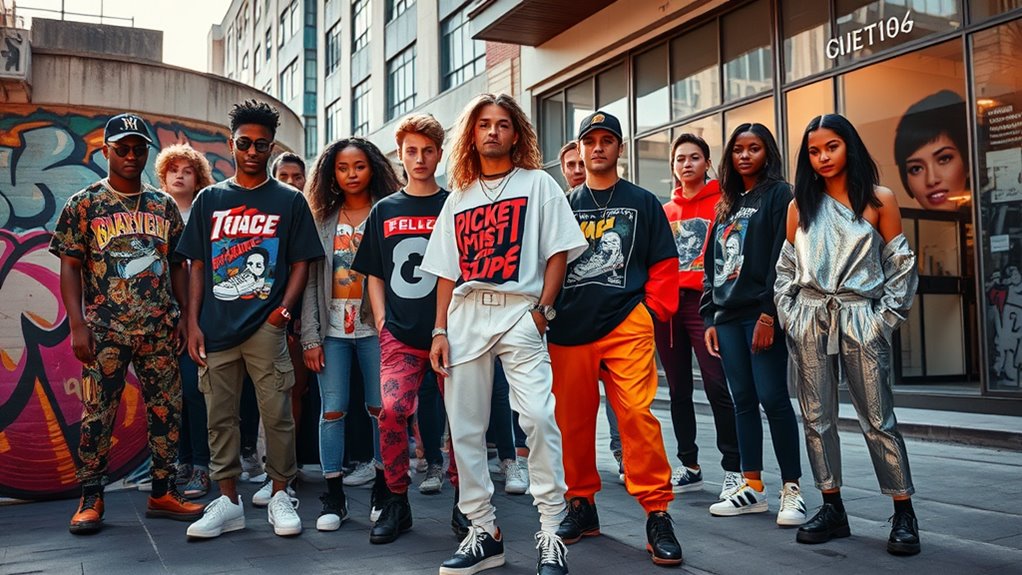
Streetwear's evolution is a fascinating expedition from rebellious youth culture to a dominant force in high fashion. It draws heavily from skate and hip-hop influences, creating bold identities. The 1990s birthed iconic brands like Supreme and BAPE, as collaborations such as Nike X Off-White changed sneaker culture. Social media amplified trends, making street style mainstream. As streetwear increasingly merges with luxury, it reshapes the entire industry. Stick around to explore how this movement continues to redefine fashion norms.
The Origins of Streetwear: A Cultural Movement
Although streetwear often seems like a modern phenomenon, its origins trace back to the energetic youth cultures of the 1980s and 1990s. You can see how graffiti influence played an essential role in shaping urban identity, as young people expressed their individuality through bold designs and lively colors. This fashion rebellion emerged from community roots, where DIY culture thrived, allowing youth to create unique pieces that resonated with their experiences. Music integration, particularly from hip-hop and punk, fueled this movement, bridging styles and nurturing a sense of belonging. As streetwear gained traction, it highlighted cultural appropriation debates, pushing boundaries within the fashion industry. The subculture evolution we've witnessed has led to a global reach, where streetwear now represents youth expression across continents. You're not just wearing clothes; you're embracing a significant narrative that connects generations and cultures, making a statement that transcends mere aesthetics.
Key Influences: Skate and Hip-Hop Culture
Skate and hip-hop culture have profoundly shaped streetwear, intertwining their influences to create a lively, dynamic aesthetic. You'll notice how these movements cultivate youth rebellion and community identity, paving the way for innovative DIY fashion. Graphic designs rooted in skate culture and hip-hop influence serve as significant tools for expression, reflecting the spirit of underground movements. Music collaborations have further cemented these connections, bringing streetwear to new audiences.
| Influence | Key Elements | Cultural Impact |
|---|---|---|
| Skate Culture | DIY fashion, graphic designs | Community identity |
| Hip-Hop Influence | Music collaborations, urban aesthetics | Youth rebellion |
| Urban Aesthetics | Street art, bold colors | Reflection of cultural identity |
| Underground Movements | Subversive styles | Challenge to mainstream norms |
| Cultural Appropriation | Blending of styles | Conversations on authenticity |
Together, these influences create a constantly changing narrative in fashion.
The Rise of Streetwear Brands in the 1990s
As street culture gained momentum in the 1990s, a wave of streetwear brands emerged, reshaping the fashion terrain. You witnessed urban rebellion manifesting through bold graphics, oversized silhouettes, and a DIY ethos. These brands didn't just sell clothes; they reflected youth identity and an attitude that challenged the status quo.
- Supreme pioneered the blend of skate culture and high fashion.
- Stüssy became synonymous with surf and street styles.
- A Bathing Ape (BAPE) introduced unique camo patterns, enchanting collectors.
- FUCT pushed boundaries with provocative designs and messaging.
Each brand contributed to a narrative that celebrated individuality and self-expression. This new wave allowed you to express your persona beyond traditional fashion norms, making streetwear a formidable movement that resonated deeply with the youth of the time. The 1990s truly marked the beginning of fashion's most innovative era, one that still influences today's trends.
Iconic Collaborations That Changed the Game
When you think about game-changing fashion collaborations, Nike X Off-White and Supreme X Louis Vuitton immediately come to mind. These partnerships didn't just blur the lines between streetwear and high fashion; they redefined them entirely. Let's explore how these iconic collaborations reshaped the industry.
Nike X Off-White
The collaboration between Nike and Off-White, spearheaded by the visionary designer Virgil Abloh, transformed the sneaker culture and raised streetwear to new heights. This partnership redefined brand identity, merging Off-White aesthetics with Nike's iconic designs, creating a fusion that resonated with both sneaker enthusiasts and fashion innovators. You witnessed how these Nike collaborations not only enhanced street fashion but also engaged consumers in a dialogue about creativity and exclusivity.
- Innovative deconstruction of classic silhouettes
- Limited releases driving hype and desirability
- Unique branding with signature quotation marks
- A new era of cross-industry creative partnerships
Ultimately, Nike X Off-White marked a pivotal moment in fashion innovation, pushing the boundaries of what streetwear could mean in the luxury market.
Supreme X Louis Vuitton
Building on the momentum of collaborations like Nike X Off-White, the partnership between Supreme and Louis Vuitton took streetwear's influence to unprecedented levels. This iconic Louis Vuitton collaboration redefined luxury, merging high fashion with the edgy, rebellious spirit of Supreme. You witnessed the revelation of an exclusive collection that featured bold graphics, luxurious materials, and a distinctive monogram, solidifying the Supreme legacy as a force in the fashion world. The hype was palpable, with fans enthusiastic lining up for a taste of this groundbreaking fusion. By challenging traditional boundaries, this collaboration not only enhanced streetwear's status but also reshaped how you perceive luxury brands. It proved that innovative partnerships can create a cultural phenomenon that resonates far beyond fashion.
The Role of Social Media in Streetwear Popularity
Social media's transformed how you discover and engage with streetwear. Influencer marketing drives trends, making them go viral almost overnight. With just a post, you can see a brand skyrocket in popularity or a new style become the next big thing.
Influencer Marketing Impact
Influencer marketing has transformed the streetwear scene, making it more accessible and appealing to a wider audience. You can see the impact through various strategies that resonate with the culture and consumers:
- Influencer partnerships improve brand authenticity, allowing brands to connect genuinely with their audience.
- Social media engagement creates a dialogue, nurturing a sense of community and belonging.
- Trend forecasting becomes more precise as influencers share insights on what's culturally relevant.
- Audience targeting sharpens promotional strategies, ensuring brands reach consumers effectively amidst market saturation.
This dynamic environment shapes consumer behavior, encouraging innovative digital storytelling that captivates and retains attention. By leveraging these elements, streetwear brands can ride the wave of cultural relevance and maintain a competitive edge.
Viral Trends Creation
The influence of social media in shaping streetwear trends can't be overstated. Platforms like Instagram and TikTok have transformed viral marketing, allowing you to discover and share styles almost instantly. You see a fresh look on your feed, and before you know it, it's trending worldwide. This immediacy fuels trend forecasting, enabling brands to pivot quickly and create designs that resonate with your desires. Streetwear brands leverage user-generated content, turning followers into brand ambassadors and amplifying their reach. You're not just a spectator; you're part of a global conversation that defines fashion's future. The synergy between social media and streetwear creates a dynamic environment where creativity and innovation thrive, making you a vital player in this constantly changing setting.
The Intersection of Streetwear and Luxury Fashion
As streetwear continues to redefine fashion norms, it seamlessly immerses with luxury brands, creating a dynamic interplay that captivates a diverse audience. You'll find that this fusion not just enhances the aesthetic of designer streetwear but also challenges traditional luxury paradigms. The collaborations between streetwear icons and high-end labels are reshaping what we consider fashionable, making exclusivity more accessible.
- Luxury collaborations often blur the lines between casual and couture.
- Designer streetwear brings a fresh, youthful energy to established fashion houses.
- Street style influences high fashion runway designs and marketing strategies.
- This intersection encourages sustainability with innovative materials and practices.
With each new collaboration, the terrain of fashion transforms, reflecting a culture that values authenticity and innovation. Embrace this evolution, as it paves the way for a bold future where streetwear and luxury coexist in exciting new ways.
Notable Fashion Weeks and Streetwear Showcases
When you think about the fashion scene, Paris Fashion Week stands out with its glamorous showcases and innovative designs. Meanwhile, New York's street style brings a raw, urban edge that influences trends globally. Both events highlight how streetwear continues to shape high fashion in exciting ways.
Paris Fashion Week Highlights
Paris Fashion Week, renowned for its blend of innovative designs and streetwear influences, showcases the lively intersection of high fashion and urban culture. You'll witness remarkable runway trends that reflect the essence of Paris street style, pushing boundaries and redefining norms. Designers draw inspiration from the streets, emphasizing comfort and individuality during maintaining a high-fashion aesthetic.
- Bold graphics and oversized silhouettes dominate the runway.
- Sustainable materials and ethical practices gain traction.
- Collaborations between luxury brands and streetwear labels rise.
- Accessories that merge function with high fashion steal the spotlight.
This fusion not just captivates the audience but equally challenges traditional fashion hierarchies, making Paris a beacon of creativity in today's constantly changing fashion environment.
New York Street Style
New York street style thrives on its unique energy and attitude, often showcased during notable fashion weeks and streetwear events. You can see the Brooklyn aesthetic influencing urban expression, merging creativity with practicality. Attendees flaunt their individuality, making the streets their runway. Events like New York Fashion Week and streetwear showcases highlight the dynamic interplay between high fashion and everyday style, bringing fresh ideas to the forefront.
| Event | Highlights | Notable Designers |
|---|---|---|
| New York Fashion Week | Innovative streetwear looks | Off-White, Fear of God |
| Brooklyn Street Fest | Community-driven fashion | Kith, Supreme |
| NYC Street Style Show | Raw, authentic expressions | A Bathing Ape, Palace |
| Capsule NYC | Emerging brands showcase | Pyer Moss, Noah |
| Fashion Forward | Sustainable streetwear trends | A-Cold-Wall, The Hundreds |
The Impact of Streetwear on Contemporary Design
Although streetwear initially emerged from urban culture, its influence on contemporary design has grown exponentially, reshaping how we view fashion today. You can see this shift in various aspects of design, where streetwear principles challenge traditional norms and embrace innovation. This evolution is evident in collaborations between high-fashion labels and streetwear brands, blurring the lines between casual and couture. Furthermore, the rise of social media has amplified the reach of streetwear, allowing local designers to connect with a global audience and showcase their unique styles. As a result, global fashion trends shaping streetwear have empowered a diverse range of voices, making the fashion landscape more inclusive and dynamic than ever before.
- Sustainable practices prioritize ethical production, pushing brands to adopt eco-friendly materials.
- Gender fluidity blurs the lines of conventional fashion, allowing everyone to express themselves freely.
- Cultural appropriation raises awareness of respect for diverse influences, encouraging authentic representation.
- Digital art integrates fashion technology, creating unique visual narratives that resonate with global audiences.
This aesthetic diversity encourages community engagement, celebrating local artisans as it reflects the global influences that permeate today's fashion environment. By embracing these elements, contemporary design not solely pays homage to streetwear but also evolves into a more inclusive and forward-thinking industry.
The Future of Streetwear in the Fashion Industry
As streetwear continues to evolve, it's clear that its future in the fashion industry will be marked by a blend of innovation and inclusivity. You'll see brands embracing sustainability practices, pushing for eco-friendly materials and ethical production methods. This shift isn't just a trend; it's a necessary evolution that aligns with consumer values.
Digital fashion is likewise reshaping streetwear, allowing you to experience clothing in virtual spaces. Envision owning a digital piece that you can showcase on social media without the environmental impact of physical production. This fusion of technology and fashion opens up endless possibilities for creativity and expression.
As you navigate this future, expect collaborations between established fashion houses and streetwear brands, further blurring the lines between high fashion and everyday wear. By championing inclusivity and sustainability, streetwear is poised to redefine the fashion environment, inviting everyone to participate in this dynamic movement.
Streetwear as a Form of Social Commentary
Streetwear has become more than just a fashion statement; it's a potent medium for social commentary. You can see how designers and brands leverage this platform to voice issues that matter. Through bold graphics and provocative slogans, streetwear transforms casual attire into protest fashion, challenging societal norms and sparking conversations.
- The rise of identity expression through clothing, embracing diverse cultures.
- Collaborations between streetwear brands and activist organizations.
- The use of recycled materials, promoting sustainability and ethical practices.
- Highlighting social justice movements, from Black Lives Matter to climate change.
When you wear streetwear, you're not just making a style choice; you're participating in a dialogue. This innovative approach to fashion empowers you to express your beliefs and connect with a broader narrative, making each piece a statement of identity and defiance.
Frequently Asked Questions
How Do Streetwear Brands Determine Their Pricing Strategies?
Envision a chef crafting a signature dish; each ingredient represents a factor in pricing. Streetwear brands mix the flavors of consumer perception and market competition to create their unique recipe. They analyze how customers view their brand and what competitors charge, adjusting their prices accordingly. When you see a limited release, it's often a calculated move to amplify exclusivity, making you feel the value is worth every penny.
What Materials Are Commonly Used in Streetwear Apparel?
When you explore streetwear apparel, you're likely to find a mix of materials that reflect both comfort and innovation. Cotton blends are popular for their softness and breathability, making them ideal for everyday wear. Conversely, technical fabrics are increasingly used to improve performance and durability, often incorporating moisture-wicking properties or weather resistance. This combination not just meets your style needs but likewise adapts to your active lifestyle.
How Can I Start My Own Streetwear Brand?
You think it's easy to start a streetwear brand? Well, it's not just about slapping a logo on a hoodie. First, define your brand identity; what makes you unique? Then, craft innovative marketing strategies that resonate with your audience. Utilize social media to create hype and engage with your followers. Collaborate with influencers to expand your reach. Keep your designs fresh and authentic, and you might just carve out a niche in this competitive market.
What Are the Environmental Impacts of Streetwear Production?
The environmental impacts of streetwear production are significant, but you can make a difference by adopting sustainable practices in your brand. Think about using organic materials and reducing waste during production. Ethical sourcing is essential, so partner with suppliers who prioritize eco-friendly methods. By focusing on these approaches, you not only reduce your brand's footprint but additionally attract eco-conscious consumers who value innovation and responsibility in fashion. Embrace change for a better future!
How Do Streetwear Trends Differ Across Various Regions?
Did you know that over 60% of streetwear enthusiasts believe regional styles shape their fashion choices? You'll find that streetwear trends vary greatly across regions, influenced by local culture and lifestyle. In Tokyo, state-of-the-art tech merges with traditional aesthetics, whereas in New York, bold graphics and urban narratives dominate. Each area's cultural influences create unique regional styles, showcasing the dynamic nature of streetwear and how it adapts to different environments and communities.